Every winter, stomach bugs seem to make the rounds—schools, daycares, workplaces, and families all feel the impact. This year, experts have noticed a new norovirus strain, which is raising questions about whether symptoms are changing, how it spreads, and what families should expect.
If you’ve heard the recent buzz and wondered whether to worry, this guide breaks everything down in simple, practical terms.
What Is Norovirus?
Norovirus is often called the “stomach flu,” even though it isn’t related to influenza. It’s a highly contagious virus that causes sudden gastrointestinal illness.
It spreads easily through:
-
Touching contaminated surfaces
-
Eating food prepared by an infected person
-
Close contact with someone who is sick
-
Tiny particles in the air after vomiting
Norovirus is notorious because it only takes a few viral particles to make someone sick—and it can live on surfaces for days.
What’s New About This Strain?
Viruses constantly mutate, and norovirus is no exception. The newest strain belongs to a group that researchers have been watching because it spreads quickly and tends to become dominant during peak seasons.
Here’s what makes this strain notable:
1. Faster Spread in Communities
Early surveillance data suggests this strain may move more quickly through:
-
Daycares
-
Schools
-
Nursing facilities
-
Households
Norovirus is already one of the most contagious viruses. Even slight changes can make a big difference in how rapidly it circulates.
2. Higher Number of Reported Cases
More clinics and emergency departments are reporting spikes in “stomach bug” visits—especially among children and older adults.
This doesn’t necessarily mean the virus is more severe—just that more people seem to be catching it.
3. Symptoms May Hit a Little Harder
While symptoms remain mostly the same, many people are reporting:
-
More intense vomiting
-
More fatigue
-
Longer recovery (2–4 days instead of 1–3)
Again, this is not necessarily a sign of dangerous severity—just that the illness may feel a bit more draining.
Symptoms of the New Norovirus Strain
The symptoms are familiar, but sometimes stronger or more prolonged.
The most common symptoms include:
-
Sudden vomiting
-
Nausea
-
Stomach cramps
-
Diarrhea (sometimes severe)
-
Headache
-
Body aches
-
Low-grade fever
-
Fatigue
Less common but possible:
-
Dehydration
-
Dizziness
-
Fast heart rate
-
Dry mouth
Symptoms typically start 12–48 hours after exposure and last 2–4 days.
Is the New Norovirus Strain More Contagious?
Most experts believe it spreads more easily—but not because of something dangerous or alarming. Norovirus strains often compete with each other, and eventually, one becomes the “dominant” version circulating each year.
This strain likely spreads more quickly due to:
-
Slight genetic changes
-
More efficient person-to-person transmission
-
Low immunity in the population (it’s new, so fewer people have built resistance)
Bottom line:
Yes, it appears a bit more contagious. But it is not more dangerous.
Is It More Severe?
Current evidence suggests no significant increase in severe complications. Most people recover at home within a few days.
However, some groups can become sicker due to dehydration:
-
Young children
-
Older adults
-
People with chronic conditions
-
Those with weakened immune systems
Watch for dehydration warning signs:
-
Very little urine
-
Dry mouth
-
Sunken eyes
-
Dizziness
-
Extreme weakness
Seek medical attention if symptoms last more than 3–4 days or if dehydration signs appear.
How Long Am I Contagious?
This is where norovirus gets tricky.
You’re contagious:
-
While you have symptoms
-
At least 48–72 hours after symptoms stop
-
Possibly up to 2 weeks (less common but possible)
The virus sticks around much longer than most stomach bugs, which is why outbreaks spread so easily.
How to Protect Your Family
A few simple actions can make a big difference.
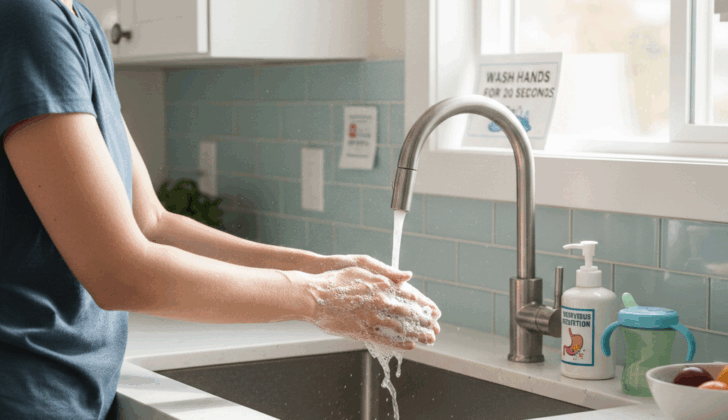
1. Wash Hands (More Than Usual)
Hand sanitizer does not kill norovirus.
Only soap and warm water reliably wash it away.
Wash before:
-
Eating
-
Preparing food
-
Helping a child with the toilet
-
Changing diapers
Wash after:
-
Bathroom visits
-
Cleaning up vomit
-
Laundry from a sick family member
2. Clean Surfaces With the Right Products
Regular household cleaners often don’t kill norovirus.
Use:
-
A bleach-based cleaner or
-
A disinfectant labeled as effective against norovirus
Pay attention to:
-
Kitchen counters
-
Bathroom surfaces
-
Light switches
-
Door handles
3. Keep Sick Kids Home
Even if they’re feeling better, they can still spread the virus for days. Keep them home for at least 48 hours after symptoms end.
4. Stay Hydrated
For adults:
-
Electrolyte drinks
-
Broth
-
Water in small sips
For kids: -
Pediatric electrolyte solutions
-
Popsicles
-
Ice chips
5. Wash Laundry Carefully
Wash contaminated bedding or clothing:
-
On hot
-
With detergent
-
Separate from other laundry if possible
Should You Be Worried?
The short answer: Be aware, not afraid.
Norovirus is unpleasant but typically mild. This new strain is:
-
Spreading faster
-
Making more people sick
-
Possibly causing slightly stronger symptoms
But there is no evidence that it is more dangerous or deadly.
Keep an eye out for symptoms, focus on prevention, and seek medical care if dehydration signs appear.
A Final Word
Every year brings new viral strains, and norovirus is one of the most common seasonal bugs. While this new strain may feel more intense or spread more quickly, families can protect themselves with a few simple habits.
Wash hands often, clean shared surfaces, and stay home when sick.
With a little awareness, you can keep your household healthy this season.
Explore More:
MDS: Healthy Holiday Eating Strategies: How to Make Nutritious Choices and Avoid Weight Gain
MDS: Quademic: Understanding Flu, COVID-19, RSV, and Norovirus