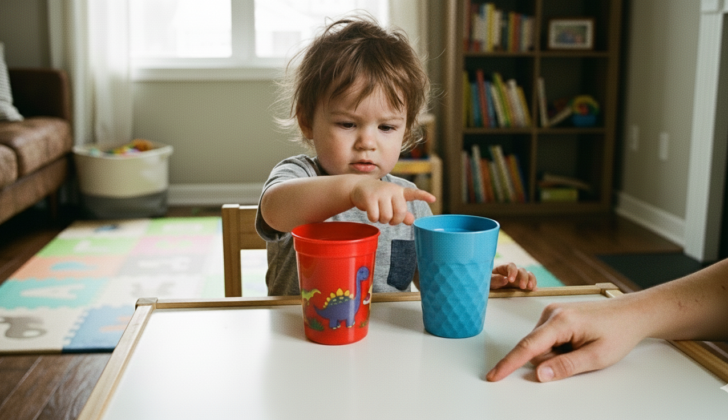
Many young children hold tightly to routines, ideas, and expectations. They may insist on using the blue cup every day. They may melt down when plans change. They may repeat the same idea over and over, or struggle to shift from one activity to another. These behaviors are common, especially for toddlers, preschoolers, and children who are still developing emotional regulation and language skills.
This article will help parents and caregivers understand what “flexible thinking” really means, why some children become “stuck,” and how to support smoother transitions, flexible problem solving, and calmer reactions throughout daily routines. You will find age-grouped strategies, step-by-step guidance, scripts you can use right away, and ideas that strengthen communication skills at the same time.
What Is Flexible Thinking?
Flexible thinking is the ability to:
- Adapt to changes in routines
- See more than one way to do something
- Try new ideas or accept alternatives
- Shift from one activity to another
- Handle unexpected events
- Regulate emotions when things feel different than expected
Children who struggle with flexible thinking often experience:
- Increased anxiety
- Difficulty transitioning
- Big reactions when things change
- Trouble problem solving
- Repetitive play or repeated ideas
- Rigid preferences that feel “all or nothing”
When a child becomes “stuck,” it is not defiance. It is usually fear, uncertainty, or difficulty processing new information. Your patient support and language modeling help them learn to bend without breaking.
Why Children Get “Stuck”
Children may become rigid for many reasons, including:
1. Limited language skills
If a child cannot express what they want, they may cling tightly to familiar routines.
2. Sensory sensitivities
Unexpected or uncomfortable sensory input makes flexibility harder.
3. Perfectionistic tendencies
Some children want things done a very specific way because it feels safe and predictable.
4. Emotional immaturity
Regulation skills are still developing, especially in toddlers and preschoolers.
5. Anxiety or uncertainty
When something is new or unclear, rigidity becomes a way to regain control.
Understanding the “why” helps us respond with empathy, not frustration.
How Parents Can Support Flexible Thinking
Children learn flexibility through repeated modeling, supportive language, gentle exposure to change, and predictable routines with small built-in variations. Each age group requires a different approach, so the next sections break down developmentally appropriate strategies.
Babies (0–18 Months)
In this stage, flexible thinking comes from shared experiences, predictable routines, and warm encouragement during gentle variations in activities.
1. Gentle Variation in Play
Introduce small, simple changes:
Steps
- Show your baby a familiar toy.
- Play with it the usual way.
- Introduce a tiny variation, such as placing the toy on your head instead of shaking it.
- Wait for their reaction.
- Model a calm, playful attitude.
Scripts
- “Look. I made a silly change.”
- “Now it goes up. Up on my head.”
- “Different, but still fun.”
Targets
- Early joint attention
- Tolerance for minor changes
- Exposure to new actions and patterns
2. Emotion Modeling
Your baby learns secure reactions from your calm voice and facial expressions.
Scripts
- “You wanted that toy. It rolled away. That was a change. I am here.”
- “You looked surprised. I see you. You are safe.”
Targets
- Emotional understanding
- Trust in caregiver support
- Early coping skills
Toddlers (18 Months – 3 Years)
Toddlers often feel strongly about routines. They might demand the same cup, the same song, or the same order of events. Flexibility grows when adults model choices, alternatives, and gentle shifts.
1. “Same or Different” Play Routines
Use familiar routines with built-in choices.
Steps
- Choose a routine your toddler enjoys (blocks, cars, bubbles).
- Do it the predictable way first.
- Offer a small variation.
- Keep your tone positive and curious.
- Celebrate any attempt at trying something new.
Scripts
- “We built a tower. Now let us try a different one.”
- “Same or different? You choose.”
- “This way also works. Let us see what happens.”
Targets
- Choice making
- Cognitive flexibility
- Language for comparing
2. Using Visuals and Simple Language During Transitions
Toddlers need clear expectations.
Steps
- Warn your child about the upcoming change.
- Show a simple picture of the next activity.
- Model a calm reaction.
- Praise flexibility.
Scripts
- “First clean up. Next snack.”
- “A change is coming. You can do this.”
- “Thank you for being flexible.”
Targets
- Sequencing
- Acceptance of change
- Emotional coping
3. Two Choices Technique
Offering choices reduces rigidity by giving your child a sense of control.
Steps
- Identify the non-negotiable part (example: wearing shoes).
- Offer two flexible options.
- Acknowledge feelings.
- Praise the decision.
Scripts
- “You need shoes. You can pick red shoes or blue shoes.”
- “You feel upset. You still made a strong choice.”
Targets
- Decision making
- Emotional validation
- Cooperative flexibility
Preschoolers (3–5 Years)
Many preschoolers struggle with rigidity because their imagination is growing, but their coping skills are still developing. This age is ideal for direct problem-solving practice.
1. “Flexible vs Stuck” Thinking Lesson
Use play-based demonstrations to teach the concept.
Steps
- Take a pipe cleaner and a pencil.
- Bend the pipe cleaner.
- Show that the pencil does not bend.
- Explain the difference in simple terms.
- Practice identifying “flexible” moments in daily life.
Scripts
- “This pipe cleaner bends. It is flexible.”
- “This pencil cannot bend. It is stuck.”
- “Your idea was stuck. Let us bend it a little.”
Targets
- Abstract thinking
- Emotional labeling
- Problem solving
2. Pretend Play with Unexpected Changes
Pretend play is a natural way to teach flexibility.
Steps
- Start a familiar play scenario (example: making pretend soup).
- Add a playful twist (example: pretend the spoon disappears).
- Help your child find another solution.
- Praise the attempt.
Scripts
- “Oh no. The spoon is missing. What else can we use?”
- “You found a new idea. That is flexible thinking.”
- “Let us try a different ingredient today.”
Targets
- Generating alternatives
- Creative problem solving
- Reduced rigidity
3. Storybooks for Flexible Thinking
Read stories that involve changes, surprises, or characters who solve problems. Pause often to ask questions.
Questions to Ask
- “What changed on this page?”
- “How could the character fix this problem?”
- “What is another idea?”
Targets
- Perspective taking
- Predicting
- Narrative flexibility
Early Elementary (5–8 Years)
At this age, children can practice reasoning, perspective taking, and real-world problem solving more directly.
1. The “Plan A and Plan B” Strategy
Teach children that life has many possible solutions.
Steps
- Explain that Plan A is the preferred plan.
- Create Plan B together for backup.
- Role-play scenarios.
- Practice using calm self-talk.
Scripts
- “Plan A was to play outside. The weather changed. What could be Plan B?”
- “I know Plan A felt important. Plan B is still a good option.”
- “You showed great flexible thinking.”
Targets
- Executive functioning
- Emotional regulation
- Alternatives and compromise
2. Perspective Taking Practice
Help your child understand that other people have different ideas and preferences.
Steps
- Present a simple disagreement scenario.
- Ask how each person might feel or think.
- Generate solution ideas.
- Discuss fairness and compromise.
Scripts
- “You want the blue marker. She wants it too. What could both of you do?”
- “How do you think she feels right now?”
- “What is a solution that works for both people?”
Targets
- Social communication
- Empathy
- Flexible negotiation
3. Problem-Solving Journal
Encourage children to write or draw about frustrations and flexible solutions.
Steps
- Provide a notebook.
- Help your child describe a problem they had.
- Brainstorm three possible solutions.
- Circle the one they would try next time.
Prompts
- “The problem was…”
- “My idea was stuck when…”
- “Next time I will try…”
Targets
- Reflective thinking
- Independent coping
- Self-advocacy
Daily Strategies for All Ages
1. Model flexibility yourself
Say your thoughts aloud.
- “The plan changed. That is different, but I can handle it.”
- “I wanted the blue cup too. I can pick another one.”
2. Use calm, predictable language
Predictability reduces fear during change.
3. Practice small changes daily
Tiny variations build resilience gradually.
4. Celebrate progress, not perfection
Even one small flexible moment deserves recognition.
5. Validate feelings
Children are more flexible when they feel understood.
Final Thoughts
Rigid thinking is not misbehavior. It is a sign that a child needs support with communication, emotional understanding, or problem solving. With patient modeling, simple language strategies, and structured opportunities to practice, children can learn to shift from “stuck” ideas to flexible, confident thinking.
Every routine offers an opportunity.
Every meltdown holds a moment of learning.
Every small step toward flexibility builds resilience for the future.
Your consistent support, understanding, and calm coaching will help your child develop lifelong skills for adaptability, problem solving, and emotional growth.
Keep Learning & Stay Connected
Follow First Words Bright Futures on Facebook and Instagram for:
-
Daily speech tips
-
Fun activity ideas
-
Q&A with a pediatric SLP
Explore More:
- MDS: Snow Day Activities That Build Speech and Language Skills
- MDS: Winter Indoor Play Ideas to Build Language Skills in Young Children
Disclaimer: This article offers general educational information. It is not a substitute for professional evaluation or treatment. Please consult a licensed Speech-Language Pathologist for personalized concerns regarding your child’s speech development.