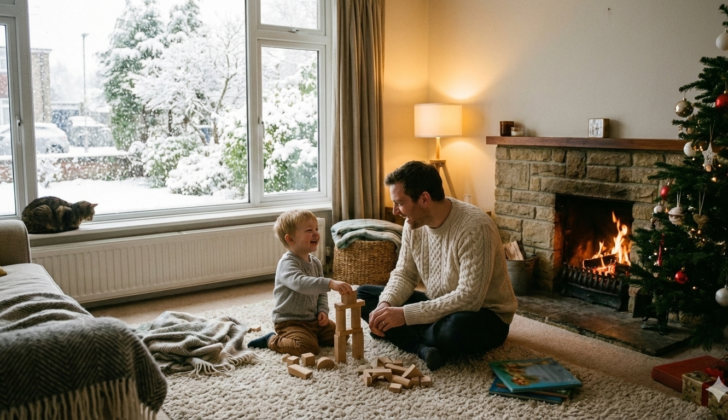
Snow days bring excitement, surprise, and a welcome break from routine. They also offer a wonderful opportunity to build your child’s speech and language skills through cozy indoor play and outdoor winter adventures. When children are relaxed, having fun, and engaged in meaningful interactions, they learn new words, practice expressive language, and build strong communication foundations.
In this article, you will find research-supported strategies, age-grouped ideas, step-by-step activities, and easy scripts you can use throughout a snow day. Every activity is designed to fit naturally into your family’s rhythm and help your child grow confidently as a communicator.
Why Snow Days Are Perfect for Language Learning
Snow days shift the pace of life. There is no rush to pack lunches. There is no morning scramble to the car. Your child has your presence, attention, and shared experiences. These shared moments are the foundation for strong communication development.
Snow days encourage language because:
- New sensory experiences (cold, crunchy, sparkling snow) create natural opportunities for describing and comparing.
- Shared household routines (baking, cleaning up, getting dressed) provide repetition, modeling, and joint attention.
- Play becomes the center of the day, and play is the most powerful tool for building communication.
- Slower pacing allows children time to think, process, and respond.
Below are detailed ideas for babies, toddlers, preschoolers, and early elementary learners.
Snow Day Language Ideas by Age Group
Babies (0–18 Months)
At this age, communication is built through connection, shared attention, and sound play. Your baby learns language when you talk about what they see, hear, and feel.
1. Indoor Sensory Snow Bin (With Real Snow or Cold Rice)
Purpose: Encourage joint attention, early vocabulary, and sound imitation.
Materials
- A shallow bin or baking dish
- A small amount of snow (or cold rice if you prefer staying indoors)
- Baby-safe household items (spoon, measuring cup, soft toy)
Steps
- Place a small amount of snow in the bin.
- Sit your baby facing you so they can see your face.
- Gently place their hands near the snow and wait for them to explore.
- Describe everything they touch.
Sample Scripts
- “Cold. The snow feels cold.”
- “You touched it. Wow, you made a mark.”
- “Scoop. Scoop the snow.”
- “Look. Snow is falling from the spoon.”
Targets
- Early vocabulary: cold, snow, wet, scoop, fall, more, all done
- Sound imitation: “brrr,” “mmm,” “ohhh”
- Early gestures: pointing, showing, reaching
2. Snow Day Song Repetition
Singing supports early listening skills, rhythm, and vocabulary.
Try these simple songs with gestures:
- “Snowflakes, Snowflakes, Falling Down”
- “The Itsy Bitsy Snowflake” (a winter version)
Script and Gestures
- “Snowflake up high” (raise hands)
- “Snowflake fall down” (wiggle fingers downward)
- “Snowflake on your nose” (touch baby’s nose)
- “Snowflake on your toes” (touch toes)
Targets
- Body part vocabulary
- Anticipation and turn-taking
- Attention to caregiver’s face and voice
3. Window Watching: Narrate the Snowfall
Sit near a window and talk about what you see. Babies learn language through hearing rich, slow, descriptive speech.
Script Ideas
- “Look at the snow. It is falling slowly.”
- “Big snow. Now small snow.”
- “White snow. Bright snow.”
- “The wind is blowing. Whoosh.”
Toddlers (18 Months – 3 Years)
Toddlers thrive with simple language, hands-on play, choices, and repetition. Snow days create endless opportunities for vocabulary building and two-word combinations.
1. Dress for the Snow: Language in Your Routine
Purpose: Teach body parts, clothing vocabulary, sequencing, and requesting.
Steps
- Lay out the winter clothes.
- Hold up one item at a time and give your child a simple choice.
- Pause so your child has time to respond.
- Label actions and describe the routine.
Scripts
- “Boots on.”
- “Hat or hood?”
- “You want help. I will help you.”
- “First boots. Next coat.”
- “Zipper up. Up. Up.”
Targets
- Vocabulary: coat, boots, zipper, mitten, hat
- Two-word combinations: “want hat,” “boots on,” “help me”
- Sequencing: first, next, last
2. Toy Snowplow Rescue
Purpose: Encourage pretend play, verbs, and problem solving.
Materials
- A shallow bin of snow or cotton balls
- Toy cars or animals
- A small shovel or spoon
Steps
- Bury toys gently under snow.
- Tell your child, “The toys are stuck. We need to dig them out.”
- Model action words as you play.
- Celebrate each rescue.
Scripts
- “Dig. Dig.”
- “Push the snow.”
- “He is stuck. Help him.”
- “You found it. You did it.”
Targets
- Verbs: dig, push, find, rescue, scoop
- Simple sentences: “I dig,” “Car stuck,” “We help”
3. Snow Painting Outside
Purpose: Build descriptive words and encourage creativity.
Materials
- Spray bottles with colored water
- Or paintbrushes and water
Steps
- Fill bottles with a tiny drop of food coloring.
- Let your child spray or paint the snow.
- Comment on colors and patterns.
Scripts
- “Red snow.”
- “Blue here.”
- “You made a big line.”
- “Let us make a rainbow.”
Targets
- Colors, size words, direction words
- Requesting: “more water,” “my turn,” “blue please”
Preschoolers (3–5 Years)
Preschoolers are ready for richer vocabulary, storytelling, problem solving, and early social communication.
1. Build a Snow Friend: Sequencing and Describing
Purpose: Support expressive language, sequencing, and describing vocabulary.
Steps
- Build a snow figure together.
- Narrate every step.
- Ask simple questions that encourage thinking.
Scripts
- “First we roll the big ball.”
- “Next we put the small ball on top.”
- “What should we add? A hat? A nose?”
- “Tell me about your snow friend. What does he look like?”
Targets
- Size concepts: big, medium, small
- Attributes: tall, round, cold, smooth
- WH-questions: what, where, who
2. Hot Chocolate Café: Pretend Play Indoors
Purpose: Build social language, vocabulary, and early conversation.
Materials
- Cups
- Spoons
- Marshmallows or cotton balls
- Pretend money
Steps
- Set up a “hot chocolate shop.”
- Take turns being the customer and the worker.
- Practice greeting, requesting, and answering questions.
Scripts
- Customer: “Hello. I would like hot chocolate please.”
- Worker: “How many marshmallows do you want?”
- Customer: “I want three please.”
- Worker: “Here you go. That will be one dollar.”
Targets
- Conversation skills
- Counting
- Polite language: please, thank you
- Asking and answering WH-questions
3. Storytelling with Winter Books
Choose any winter-themed book (The Snowy Day, Bear Snores On, etc.)
Steps
- Look at the pictures first without reading.
- Ask your child what they think will happen.
- Read the story slowly.
- After reading, retell the story together.
Scripts
- “What do you see on this page?”
- “What do you think will happen next?”
- “Tell me the story in your own words.”
- “How did the character feel?”
Targets
- Predicting, retelling, sequencing
- Emotions vocabulary
- Early literacy development
Early Elementary (5–8 Years)
At this stage, children can engage in more complex conversations, longer stories, and higher-level problem solving.
1. Snow Science Experiment: Language Through Inquiry
Purpose: Build academic language, observation skills, and reasoning.
Materials
- Cup of snow
- Cup of warm water
- Timer
Steps
- Collect snow together.
- Predict what will happen when it melts.
- Pour warm water over the snow.
- Observe and discuss changes.
Scripts
- “What do you predict will happen?”
- “Let us watch closely. The snow is melting.”
- “Why do you think it melted so fast?”
- “What did we learn?”
Targets
- Academic vocabulary: predict, observe, melt, change
- Cause and effect
- Sequencing: first, next, then, last
2. Create a Snow Day Comic Strip
Purpose: Strengthen narrative skills and expressive language.
Steps
- Fold paper into three or four sections.
- Have your child draw what happened during the snow day.
- Add speech bubbles or captions.
- Encourage them to tell the story to someone else.
Scripts
- “What should go in the first box?”
- “What happened next?”
- “What did the character say?”
- “Tell me the whole story from the beginning.”
Targets
- Narrative development
- Sentence expansion
- Perspective-taking
3. Build a Snow Obstacle Course
Purpose: Improve following directions, listening skills, and problem solving.
Steps
- Create simple stations: jump over a mound, crawl under a branch, walk around a tree.
- Give one-step directions, then two-step, then three-step.
- Switch roles and let your child give you directions.
Scripts
- “Jump over the snow, then touch the tree.”
- “Crawl under the branch and walk around the big pile.”
- “Your turn. Give me a direction.”
Targets
- Following multi-step directions
- Using prepositions
- Leadership and communication confidence
General Snow Day Strategies for All Ages
Use Slow, Simple Language
Pause often so your child can respond.
Model, Do Not Demand
Show them what to say by saying it yourself.
Follow Their Lead
If they love pretending to shovel, join them and add language to it.
Repeat Key Words Often
Children need many, many exposures before a word becomes part of their vocabulary.
Celebrate Small Moments
Every shared smile, gesture, sound, or word strengthens communication.
Final Thoughts
Snow days provide gentle magic. They slow life down and open space for connection, curiosity, and play. With simple intentional strategies woven into your day, you can support your child’s speech and language development in meaningful and joyful ways.
Whether you have a baby exploring the feel of cold snow, a toddler building two-word phrases during pretend play, a preschooler retelling winter stories, or an elementary learner experimenting with science, every interaction becomes a learning opportunity.
Enjoy the snow. Enjoy the time together. Enjoy watching your child grow as a communicator.
Keep Learning & Stay Connected
Follow First Words Bright Futures on Facebook and Instagram for:
-
Daily speech tips
-
Fun activity ideas
-
Q&A with a pediatric SLP
Explore More:
- MDS: How to Give Specific Praise to Support Your Child’s Communication Skills
- MDS: Winter Indoor Play Ideas to Build Language Skills in Young Children
Disclaimer: This article offers general educational information. It is not a substitute for professional evaluation or treatment. Please consult a licensed Speech-Language Pathologist for personalized concerns regarding your child’s speech development.