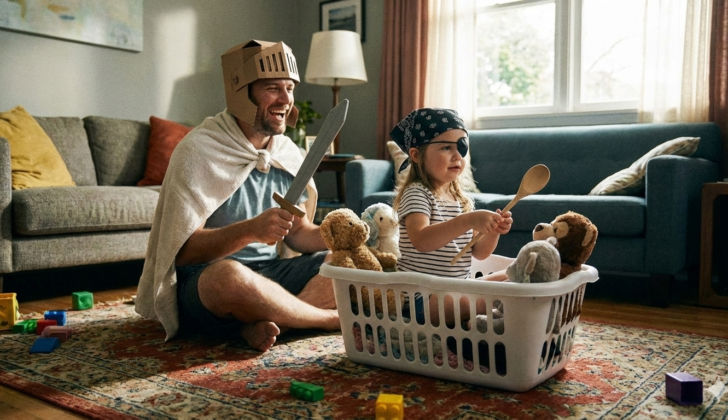
When most people think about speech delays, they imagine a child who cannot pronounce certain sounds clearly or who is late to start talking. While those challenges are important, speech delays reach far beyond pronunciation and vocabulary. They can affect the way a child connects, plays, and builds friendships.
For a preschooler or early elementary student, speech and language are the main tools for joining games, solving problems with peers, and sharing ideas. When those tools are limited, social interactions can quickly become confusing or discouraging.
As a speech-language pathologist (SLP), I have met many parents who say,
“He is so friendly, but other kids do not understand him.”
“She wants to play, but she gives up when no one knows what she means.”
These situations are common and they are deeply meaningful. Communication skills shape confidence, friendships, and emotional well-being. This article will explore how speech delays affect social growth and what parents can do every day to support their child’s success.
How Speech Delays Affect Social Interaction
Speech and social skills develop hand-in-hand. When one area lags, the other often feels the impact.
1. Difficulty Being Understood
Children with speech sound delays may have trouble producing certain sounds or combinations (for example, “sp,” “r,” or “th”). Peers might respond with confusion, laughter, or simply walk away.
Real-life example:
Four-year-old Mia calls her friend “Wyah” instead of “Lila.” Lila laughs and says, “That is not my name!” Mia feels embarrassed and stops trying to talk during playtime.
How it affects social skills:
Mia’s speech delay leads to fewer successful interactions. She begins to withdraw, which limits opportunities to practice social communication even more.
2. Trouble Starting or Maintaining Conversations
Children who struggle to find the right words, formulate sentences, or understand grammar may find it challenging to keep a conversation going.
Real-life example:
During circle time, the teacher asks, “What did you do this weekend?”
Ethan knows he went to the park, but the words will not come. By the time he starts his sentence, the class has moved on. He shrugs and stays quiet next time.
How it affects social skills:
Peers see Ethan as “shy,” but in reality, he is unsure how to join in. Over time, he might begin to avoid group discussions altogether.
3. Difficulty Understanding Social Language
Social language or “pragmatics” includes understanding tone of voice, humor, idioms, and personal space. Some children with speech or language delays also struggle to read these subtle social cues.
Real-life example:
A group of first graders pretends to be superheroes. One says, “You are the bad guy!”
Leo frowns, thinking his friends are being mean. He runs off crying.
How it affects social skills:
Leo misses the playful context because language comprehension is harder for him. Misunderstandings like this can create tension or isolation among peers.
4. Reduced Confidence and Participation
When children sense that others do not understand them or that communication is a struggle they may retreat from social opportunities.
Real-life example:
A preschooler at the playground wants a turn on the swing. He tries to say, “My turn!” but others do not respond. Eventually, he walks away to play alone.
How it affects social skills:
The child experiences repeated communication failures, which can lead to frustration, lower self-esteem, and fewer friendships.
The Impact Beyond the Classroom
Speech delays do not only affect school participation. Even in everyday settings, family gatherings, birthday parties, playgrounds, or playdates, communication differences can influence how a child is perceived and how they feel.
- At birthday parties, children with unclear speech may hesitate to talk to new friends.
- On playgrounds, misunderstandings can lead to conflict (“He said I cheated!”).
- At home, siblings may take over conversations, leaving the child with fewer chances to express ideas.
Over time, these small moments add up. A child might appear quiet, anxious, or even uninterested in others, when in fact they simply lack the tools to connect.
Helping Your Child Build Communication Confidence
Parents play a powerful role in supporting both speech and social development. The goal is not to speak for the child, but to gently coach, model, and scaffold communication in real-world settings.
Below are strategies and realistic scripts to guide those moments.
1. Model, Do Not Correct
Children learn best by hearing correct models rather than being told, “That is wrong.”
Example:
Child: “I want the wed cup.”
Parent: “You want the red cup. Here is the red cup.”
This allows your child to hear the correct sound without feeling discouraged.
Parent Tip: Keep your tone warm and natural. The goal is to keep communication flowing, not to turn every sentence into a lesson.
2. Create Opportunities for Successful Communication
Give your child structured chances to be understood and celebrated.
- Offer choices (“Do you want grapes or apple slices?”).
- Use routines they know well so language feels predictable.
- Give them time to respond before speaking for them.
Example Script:
“You are thinking. I will wait and listen.”
This brief pause communicates patience and respect.
3. Prepare Before Social Situations
Before playdates or school, preview common social scenarios. Role-play what might happen and practice simple phrases your child can use.
Example: The Playground Plan
- “What will you do if you want to join the game?”
→ “I can ask, ‘Can I play?’” - “What if someone says no?”
→ “I can find another game or ask a different friend.”
Parent Script During Practice:
“Let us try it together. You walk up, and I will pretend to be your friend. Look at me and say, ‘Can I play?’ Nice job! You used strong words.”
This kind of “social rehearsal” prepares your child to communicate confidently in real life.
4. Teach Communication Repair Skills
Even adults mishear each other. Children with speech delays need explicit tools for fixing communication breakdowns.
Example Script for Parents:
“If someone says, ‘What?’ you can try again or use your hands to show them.”
“You can say, ‘Let me try again,’ or ‘I mean…’”
Practice this at home in a playful way. Pretend you did not understand something and model how to repeat or clarify.
5. Support Play with Peer Coaching
When possible, guide peers to be good communication partners too.
Example:
At a birthday party, a parent might quietly explain,
“Sometimes Jack’s words are a little hard to understand. If you do not understand him, you can ask, ‘Can you show me?’ or ‘Tell me again.’”
This gentle coaching helps other children respond with patience instead of confusion.
6. Expand, Extend, and Encourage
When your child speaks, expand on their language to model more complex social communication.
Example:
Child: “Car go!”
Parent: “Yes, the red car is going fast! You are driving so carefully.”
This natural extension introduces new words while showing interest in your child’s ideas.
Why it matters:
Every expanded comment models turn-taking, shared attention, and reciprocal conversation—all key components of social communication.
7. Strengthen Emotional Vocabulary
Children with limited speech often struggle to label or express feelings, which can lead to frustration or outbursts. Build emotional vocabulary through daily moments.
Example Scripts:
“You look disappointed. You really wanted that turn.”
“That made you proud. You worked hard!”
“You are feeling frustrated because your tower fell.”
When children learn to label emotions, they gain tools for managing them and communicating them to others.
8. Provide Visual and Environmental Support
Visual supports reduce the language load and increase independence:
- Use picture cards for common play phrases (“My turn,” “Help,” “Stop”).
- Create a feelings chart to practice emotional words.
- Offer play scripts for routines (“Hi,” “Can I play?” “Thank you,” “Bye”).
Example:
Before a playdate, review the “Friend Words” chart:
“These are words we can use with friends—‘Hi,’ ‘Can I have a turn,’ ‘Thank you,’ and ‘Bye.’ Let us see how many we can use today.”
9. Model Resilient Language When Breakdowns Occur
When miscommunication happens, stay calm and model how to respond.
Example:
Peer: “What?”
Parent: “Sometimes it is hard to hear in a noisy room. You can try again or show with your hands.”
Then turn to your child and support them with a calm model:
“You said ‘car.’ Let us say it slowly together—‘car.’ There you go.”
The key is to help your child experience communication as repairable, not shameful.
10. Celebrate Progress, Not Perfection
Social success does not mean flawless speech. It means connection, confidence, and persistence.
Celebrate small moments:
- Your child greets a peer.
- Your child repeats themselves calmly after being misunderstood.
- Your child asks for help or joins a game independently.
Parent Reinforcement Script:
“You tried again, and your friend understood you. That is exactly what good communicators do!”
Praise effort, bravery, and social risk-taking as much as correct speech.
How Parents Can Partner with Professionals
If your child is receiving speech therapy, share social challenges you observe outside of sessions. Collaboration helps the SLP target real-life communication needs, not just sound production.
Ask your child’s therapist for:
- Social scripts to practice at home.
- Suggestions for community programs or social groups.
- Updates on progress in pragmatic (social) language goals.
Together, you and your SLP can create consistency across settings—school, home, and play.
Final Thoughts: Communication Builds Connection
Speech delays do not define a child. They are simply one piece of the developmental picture. When supported early and compassionately, children with speech delays grow into confident communicators who connect deeply with others.
Every time you patiently model, wait, expand, and encourage, you send the message:
“Your voice matters. I understand you. I will help you be heard.”
Through those daily interactions. whether at the dinner table, the playground, or a birthday party, your child learns that communication is not just about talking, but it is about belonging too.
Parent Takeaways
- Speech delays can influence confidence, peer connection, and emotional growth, but these challenges are highly responsive to support.
- The most powerful strategies are simple: model, wait, expand, and celebrate.
- Social skills develop through daily experiences, not just therapy sessions.
- Every successful interaction, no matter how small, builds your child’s communication foundation.
Keep Learning & Stay Connected
Follow First Words Bright Futures on Facebook and Instagram for:
-
Daily speech tips
-
Fun activity ideas
-
Q&A with a pediatric SLP
Explore More:
- MDS: How to Help Your Child Learn to Ask Questions | Parent’s Guide
- MDS: Why Modeling Language Works Better Than Correcting Your Child’s Speech
Disclaimer: This article offers general educational information. It is not a substitute for professional evaluation or treatment. Please consult a licensed Speech-Language Pathologist for personalized concerns regarding your child’s speech development.