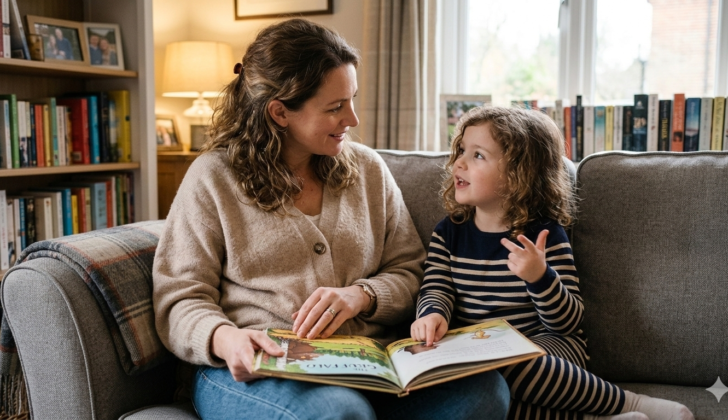
Every parent wants their child to be able to express themselves clearly. When our children are developing, this is not always the case. Common parent statements include:
“I understand my child, but no one else does.”
“Family members are always asking my child to repeat.”
“Other kids look confused when my child talks.”
When these moments happen, parents often wonder:
Is this normal? Will they outgrow it? Should I be correcting them more?
This is where speech intelligibility comes in and understanding it can make a big difference in how confident you feel supporting your child at home.
What Is Speech Intelligibility?
Speech intelligibility simply means how much of your child’s speech is understood by other people.
It is not about:
- Saying every sound perfectly
- Having “adult-like” speech
- Never making mistakes
Instead, intelligibility focuses on the big picture:
Can people understand what your child is trying to say?
A child can have speech errors and still be intelligible. On the other hand, a child may say lots of words, but be very hard to understand.
Why Speech Intelligibility Matters
When children are difficult to understand, it can impact more than just speech.
Low intelligibility can affect:
- Social interactions (peers may stop engaging)
- Confidence (children may talk less or give up)
- Behavior (frustration, meltdowns, or acting out)
- Learning (teachers may miss what a child knows)
Children who are understood are more likely to:
- Participate in conversations
- Take communication risks
- Feel successful when speaking
This is why intelligibility, not just “clear sounds” is such an important goal.
Speech Intelligibility Norms (And Why You May Hear Different Ones)
Parents are often told different expectations depending on where they look, and that can feel confusing.
The Traditional (Older) Norms
For many years, families were told:
- By age 2: ~50% understood by unfamiliar listeners
- By age 3: ~75% understood
- By age 4: ~100% understood
These norms are still commonly shared, but newer research has given us a more accurate picture of how children actually develop.
Updated Norms Based on McLeod’s Research
More recent research by McLeod and colleagues (often referred to as the McLeod norms) shows that intelligibility develops more gradually than we once believed.
According to this research:
- By age 2: ~50% intelligible
- By age 3: ~75% intelligible
- By age 4: ~85–90% intelligible
- By age 5: ~90–95% intelligible
This means:
✔ Some speech errors are still expected at age 4
✔ Perfection is not the goal
✔ Growth happens over time, not overnight
Both sets of norms exist, which is why you may hear different answers. As SLPs, we now rely more heavily on functional intelligibility, not just age cutoffs.
When Should Parents Be Concerned?
Consider reaching out for support if:
- Strangers understand much less than expected for your child’s age
- Your child becomes frustrated or avoids talking
- You frequently translate for your child
- Teachers or caregivers report difficulty understanding them
Trust your instincts. You know your child best.
Simple, Practical Ways to Improve Speech Intelligibility at Home
You do not need special materials or therapy training to support intelligibility. Small, consistent changes in daily routines can help tremendously.
1. Slow the Pace (Without Saying “Slow Down”)
Many children talk quickly, which makes speech harder to understand.
What to do instead:
- Model a slower pace yourself
- Pause naturally between words
Script to try:
“You said Iwantthattoy. Let me try it slowly: I… want… that… toy.”
This helps without correcting or interrupting.
2. Repeat What You Think You Heard
Instead of saying “What?” or “Say it again,” repeat your best guess.
Why this helps:
- Reduces frustration
- Models clearer speech
- Encourages self-correction
Example:
Child: “I wan da boo.”
Parent:
“Oh! You want the blue one.”
If you guessed incorrectly, your child will often fix it naturally.
3. Emphasize Key Words, Not Every Sound
Trying to fix every error is overwhelming for everyone.
Focus on:
- Important words
- Words that change meaning
Instead of:
“No, say it right.”
Try:
“Yes, truck. Big truck!”
This keeps communication positive while modeling clarity.
4. Use Natural Recasts During Play
A recast means repeating what your child said, just a little clearer.
Step-by-step:
- Listen to your child’s message
- Repeat it back clearly
- Keep the interaction going
Example:
Child: “Dog run fas.”
Parent:
“Yes! The dog is running fast!”
No drilling. No pressure. Just natural conversation.
5. Reduce the Demand to Repeat
Asking children to repeat themselves too often can make them shut down.
Try this balance:
- If you understand them → respond naturally
- If you do not → repeat your best guess or ask a choice question
Script:
“Do you mean the red one or the blue one?”
This supports communication without putting them on the spot.
What About Correcting Speech?
This is one of the biggest parent questions.
You do not need to correct every mistake. In fact, over-correcting can:
- Reduce confidence
- Decrease talking
- Increase frustration
Modeling is usually more effective than correcting.
If your child is in speech therapy, your SLP can guide you on which sounds or patterns to focus on and which to let go for now.
A Final Reassurance for Families
Speech intelligibility is not about perfection.
It is about being understood, feeling confident, and wanting to communicate.
Progress often looks like:
- Being understood by more people
- Fewer breakdowns
- Increased confidence
Those changes matter just as much as clear sounds.
If you are ever unsure, asking questions and seeking guidance is not overreacting. It is advocating.
You are already doing important work just by paying attention and supporting your child’s voice.
Keep Learning & Stay Connected
Follow First Words Bright Futures on Facebook and Instagram for:
-
Daily speech tips
-
Fun activity ideas
Education -
Q&A with a pediatric SLP
Explore More:
- MDS: Should You Correct Your Child’s Speech?
- MDS: My Child Gets Frustrated When Talking: What Parents Can Do
Disclaimer: This article offers general educational information. It is not a substitute for professional evaluation or treatment. Please consult a licensed Speech-Language Pathologist for personalized concerns regarding your child’s speech development.