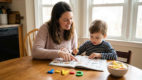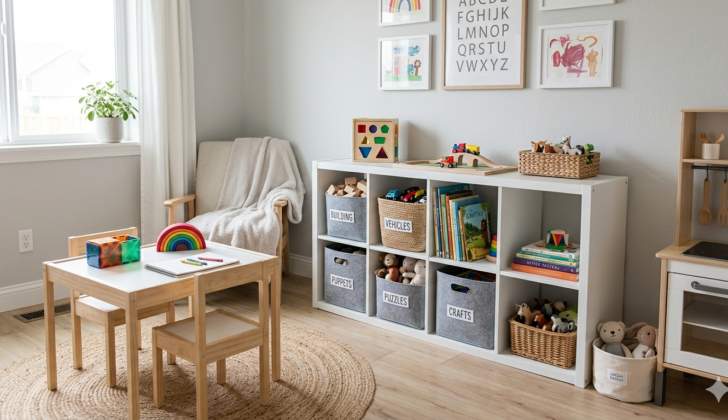
Many parents and caregivers feel pressure to buy more toys to support learning. When a child seems bored, the natural response is often to add something new. Over time, play spaces become crowded, and children move quickly from toy to toy without really engaging.
What surprises many families is that having fewer toys available at one time often leads to richer play, better focus, and more opportunities for language growth.
Toy rotation is a simple strategy that supports communication by creating novelty, increasing engagement, and encouraging new words to emerge naturally through play.
What Is Toy Rotation?
Toy rotation means intentionally limiting the number of toys available at one time and changing them periodically. Instead of having every toy out all the time, only a small selection is accessible, while the rest are stored away and reintroduced later.
This is not about restriction or control. It is about creating an environment that supports meaningful play and communication.
Why Toy Rotation Supports Language Development
Children learn language best when they are engaged and focused. When too many toys are available, children often:
- Jump quickly from one toy to another
- Use toys briefly without deep play
- Rely on familiar actions and words
Toy rotation helps by:
- Making toys feel new again
- Encouraging longer play sequences
- Creating natural reasons to talk
- Supporting new vocabulary and sentence use
When a toy feels novel, children are more motivated to explore, comment, request, and ask questions.
A Real-Life Example: Too Many Toys, Too Few Words
Imagine a playroom where shelves are full and toys are spread across the floor. A child moves from blocks to cars to puzzles in minutes. Play is busy, but language is limited.
Now imagine the same room with just:
- A set of blocks
- A toy kitchen
- A small basket of animals
With fewer choices, the child stays longer with each toy. They begin stacking, pretending, feeding, and narrating actions. Language increases because play becomes deeper and more intentional.
Why Novelty Matters for Vocabulary Growth
When children already know how to play with a toy, they often rely on the same familiar words and actions. When a toy feels new, their brain becomes more alert and curious.
Novelty encourages:
- Exploration
- Problem solving
- New word use
- Adult-child interaction
This is where new vocabulary often emerges.
Step-by-Step: How to Start Toy Rotation at Home
Step 1: Gather All Toys in One Place
This helps you see how many toys are available and which ones are rarely used.
Step 2: Choose a Small Selection
Select five to eight toys that:
- Encourage interaction
- Can be used in multiple ways
- Match your child’s interests
Examples include blocks, pretend food, vehicles, animals, dolls, or simple puzzles.
Step 3: Store the Rest Out of Sight
Use bins, closets, or shelves. Out of sight helps toys feel new when they return.
Step 4: Rotate Every One to Two Weeks
Switch toys based on interest, not a strict schedule. If a toy is still being used creatively, keep it longer.
Choosing Toys That Encourage Language
Not all toys support language equally.
Toys that encourage vocabulary include:
- Pretend play sets
- Open-ended toys like blocks
- Figures and animals
- Play food and kitchen items
Toys with one button or one outcome often limit opportunities for communication.
How Toy Rotation Encourages New Words
When a rotated toy returns, adults naturally talk about it.
“You found the farm.”
“These animals are back.”
“Look what is new.”
This creates natural opportunities for:
- Naming
- Describing
- Commenting
- Asking questions
Language happens without pressure or prompting.
Simple Play Scripts to Model Language
Example: Farm Set
Adult: “The cow is eating.”
Pause.
Adult: “Eat.”
Pause.
Adult: “The cow eats.”
Follow your child’s actions and keep language simple and repetitive.
Using Toy Rotation With Children Who Use Few Words
For children with limited expressive language, toy rotation can be especially powerful.
Familiar toys may no longer motivate communication. A rotated toy feels interesting and worth communicating about.
Example Script
Adult: “Wow. New toy.”
Pause.
Adult: “Car.”
Pause.
Adult: “The car goes.”
Wait and watch for any response, including looks, gestures, or sounds.
Supporting Turn-Taking and Interaction
With fewer toys available, adults naturally become more involved in play. This supports:
- Turn-taking
- Joint attention
- Back-and-forth interaction
These skills are the foundation for expressive language.
What If My Child Asks for a Toy That Is Put Away?
It is okay to acknowledge their request.
“You want the train.”
Pause.
“The train is resting. We can play with it another day.”
This validates communication while maintaining the rotation.
Common Concerns From Parents
“My child gets bored.”
Boredom often leads to creativity and deeper play.
“They ask for the same toys.”
Familiar favorites can stay longer. Rotation is flexible, not rigid.
“This feels like less learning.”
Less clutter often leads to more meaningful learning.
How Toy Rotation Builds Confidence
When children engage deeply with play, they feel successful. Success encourages communication.
Toy rotation helps children:
- Stay engaged longer
- Try new actions
- Use new words
- Communicate more independently
Confidence grows through mastery, not quantity.
A Final Thought for Parents and Caregivers
You do not need more toys. You need more opportunities for meaningful interaction.
Toy rotation creates space for language to grow naturally through play, curiosity, and connection.
Fewer toys.
Deeper play.
More language.
Sometimes, doing less creates more.
Keep Learning & Stay Connected
Follow First Words Bright Futures on Facebook and Instagram for:
-
Daily speech tips
-
Fun activity ideas
-
Q&A with a pediatric SLP
Explore More:
- MDS: How to Be a Play Partner: Simple Ways to Build Language Through Play
- MDS: Stop the Quiz: How Fewer Questions Help Your Child Talk More
Disclaimer: This article offers general educational information. It is not a substitute for professional evaluation or treatment. Please consult a licensed Speech-Language Pathologist for personalized concerns regarding your child’s speech development.