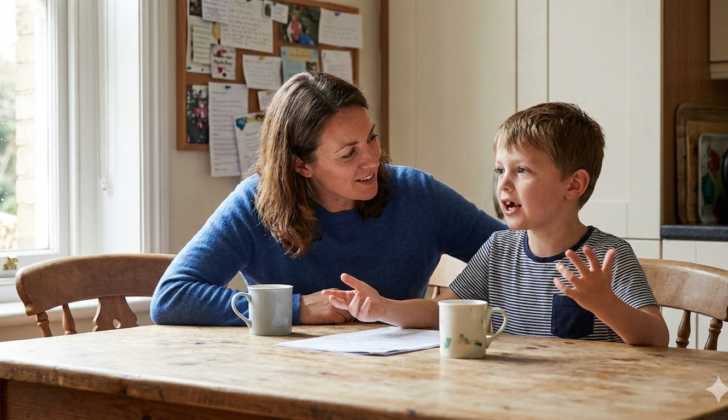
Many parents and caregivers have shared a similar concern with me at some point:
“I know what my child wants to say, so I just say it for them.”
Or, “If I wait too long, they get frustrated.”
Or even, “I ask the question, but they just stare at me.”
If this sounds familiar, you are not doing anything wrong. In fact, most adults move through conversations quickly. We are efficient. We anticipate. We fill silence without thinking. Fr many children, especially young ones or those still developing speech and language, conversation moves at a much slower place.
One of the most powerful and overlooked strategies for supporting communication is also one of the simplest: slowing down and waiting.
This does not mean forcing silence or creating pressure. It means intentionally giving a child enough time to process, plan, and respond. When we slow down and wait, we are telling a child, “I believe you have something to say, and I am willing to give you the time you need.”
Why Waiting Matters for Language Development
Language happens quickly in adult brains. We hear a question, process it, form a response, and speak in a matter of seconds. A child’s brain is doing much more work behind the scenes.
When a child hears a question or comment, their brain must:
- Understand the words that were said
- Figure out what is being asked
- Decide what they want to say
- Plan how to say it
- Coordinate their mouth and breath to speak
That is a lot to manage, especially for young children or children with speech and language delays.
When adults move on too quickly, fill in words, or repeat the question right away, the child’s brain does not get the chance to finish this process. Over time, this can lead to fewer attempts to communicate, more reliance on adults speaking for them, or frustration during conversations.
Waiting gives the brain time to work.
What “Waiting” Really Looks Like
Waiting does not mean staring at your child in silence or demanding an answer. It looks calm, relaxed, and supportive.
Waiting means:
- Asking a question or making a comment
- Pausing for a full five to ten seconds
- Keeping a neutral, expectant expression
- Staying present without rushing or prompting
For many adults, five seconds feels very long. In reality, it is often exactly what a child needs.
A Real-Life Example: Snack Time
Imagine your child is standing near the pantry during snack time.
Instead of saying:
“Do you want crackers or apples? You want crackers, right? Here, I will get crackers.”
Try this instead:
- Hold up the crackers and the apples.
- Say, “Snack time. What do you want?”
- Pause.
- Count silently to five.
- Look at your child with interest.
If your child responds with a word, sound, gesture, or look, acknowledge it:
“You said crackers. Crackers it is.”
If your child does not respond yet, you can model without taking over:
“You can say crackers or apples.”
Then pause again. If they do not imitate you, encourage them to use a gesture while you model the option one last time while giving them their selection.
This approach keeps the responsibility of communication with the child, while still offering support.
Why Silence Feels Uncomfortable
Many adults feel uncomfortable with silence. Silence can feel awkward or like something is wrong. In conversations with children, silence often means thinking.
When you wait, you are not doing nothing. You are giving space.
Children learn quickly that when adults wait, their communication matters. Over time, this builds confidence, independence, and stronger expressive language skills.
Slowing Down Your Own Speech
Waiting works best when it is paired with slower adult speech.
When adults speak more slowly:
- Children understand more
- Children hear clear sound models
- Children feel less rushed
You do not need to speak unnaturally or overly simplified. Instead, aim for calm, clear, and intentional speech.
For example, instead of:
“Put your shoes on, we have to go, hurry up.”
Try:
“Shoes on.”
Pause.
“Then we go.”
This gives your child time to process each idea.
Step-by-Step Strategy: Ask, Wait, Respond
This simple routine can be used during any daily activity.
Step 1: Ask or Comment
Use a short, clear question or comment.
“What happened?”
“Your turn.”
“Tell me.”
Step 2: Wait
Pause for five to ten seconds.
Avoid repeating the question right away.
Avoid filling the silence.
Step 3: Respond to Any Attempt
Respond warmly to words, sounds, gestures, or looks.
“You tried to tell me.”
“I see you looking at the ball.”
“You said go.”
This teaches children that communication does not have to be perfect to be valued.
Supporting Children Who Use Few Words
If your child uses limited words or is not speaking yet, waiting is still important.
Communication is more than spoken words. It includes:
- Pointing
- Looking
- Reaching
- Gestures
- Sounds
When you wait, you give your child time to use any of these forms of communication.
Example: Toy Play
Your child wants a toy that is out of reach.
Instead of immediately handing it to them:
- Hold the toy.
- Look at your child.
- Pause.
- Wait for a look, reach, sound, or word.
Then respond:
“You are reaching. You want the car.”
Pause again.
“Car.”
This turns a moment of frustration into a moment of learning.
Using Waiting During Play
Play is one of the best times to practice waiting because it feels natural and low pressure.
Example: Building Blocks
Sit with your child and take turns placing blocks.
Say:
“My turn.”
Place a block.
Pause.
“Your turn.”
Wait.
If your child does not respond right away, stay calm. Look expectantly. Let them lead.
Over time, children learn the back and forth nature of conversations through play.
What to Do If Your Child Becomes Frustrated
Waiting should never feel like withholding or ignoring. If your child becomes frustrated:
- Acknowledge their feelings
- Offer gentle support
- Keep the interaction positive
For example:
“I see you are trying to tell me. I am waiting.”
Pause.
“You can show me.”
This reassures your child that they are supported, not pressured.
Common Mistakes
Repeating the Question Too Quickly
Instead of repeating, pause longer. Children often need more time than we expect.
Answering for the Child
Even when you know the answer, give them the opportunity to try first.
Over-Prompting
Avoid too many hints at once. One simple model is often enough.
Why Waiting Builds Confidence
When adults slow down and wait, children learn:
- Their voice matters
- Communication is worth the effort
- They are capable of expressing themselves
This confidence carries over into social interactions, learning environments, and daily routines.
A Final Thought for Parents and Caregivers
Slowing down does not mean lowering expectations. It means matching your pace to your child’s developmental needs.
Every pause you give is an opportunity for growth.
Slow down.
Wait.
Listen.
You might be surprised by what your child has been ready to say all along.
Keep Learning & Stay Connected
Follow First Words Bright Futures on Facebook and Instagram for:
-
Daily speech tips
-
Fun activity ideas
-
Q&A with a pediatric SLP
Explore More:
- MDS: Why Waiting Is So Hard for Young Children
- MDS: How to Help Your Child Learn to Ask Questions | Parent’s Guide
Disclaimer: This article offers general educational information. It is not a substitute for professional evaluation or treatment. Please consult a licensed Speech-Language Pathologist for personalized concerns regarding your child’s speech development.