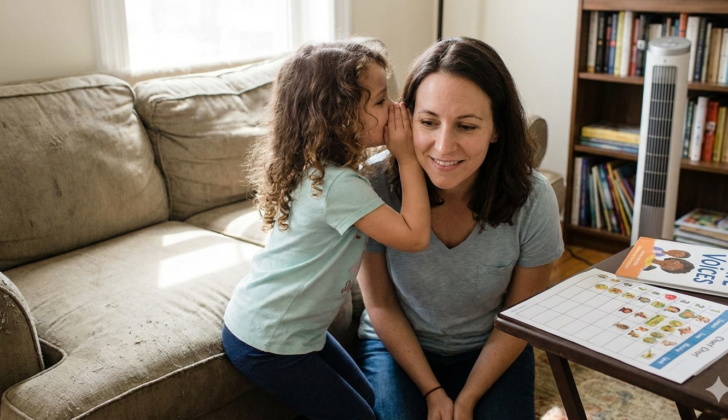
If your child speaks freely at home, but becomes quiet or silent in other settings, it can be confusing and concerning. Many families wonder what this means and whether it is something to worry about.
The good news is that not talking in certain situations does not automatically signal a problem or a diagnosis. Some children simply need more time to warm up, while others are more sensitive to new environments, expectations, or social pressure.
This article is designed to help you understand what selective mutism is, what it is not, and how professionals thoughtfully determine when support may be helpful without rushing to labels or assumptions.
Not Talking in Public Does Not Automatically Mean Selective Mutism
It is very important to say this clearly:
A child who does not talk in public does NOT automatically have selective mutism.
Many children go through periods where they:
- speak freely at home, but very little elsewhere
- observe quietly before participating
- feel overwhelmed in busy or unfamiliar environments
- take longer to warm up to adults or peers
This can be completely typical, especially for:
- toddlers and preschoolers
- children new to school or childcare
- children with cautious or sensitive temperaments
- children adjusting to big changes
Selective mutism is considered only when the pattern is persistent, consistent, and significantly impacts daily functioning.
What Is Selective Mutism?
Selective mutism is an anxiety-based communication disorder in which a child consistently has difficulty speaking in certain social situations despite having the ability to speak comfortably in others.
It is not a choice.
It is not defiance.
It is not a lack of understanding.
Think of it as a “freeze” response. When anxiety rises, the child’s nervous system goes into protection mode, and speech becomes inaccessible, even though the words are there.
How Professionals Determine Whether It Is Selective Mutism
A diagnosis is never based on one observation or one setting. It requires looking at patterns over time.
Professionals consider:
- Consistency: Does the child struggle to speak in the same settings over time?
- Contrast: Is there a clear difference between where the child can talk and where they cannot?
- Duration: Has this pattern lasted at least one month (not including the first month of school)?
- Impact: Is it interfering with learning, social connection, or daily functioning?
- Exclusion of other causes: Is the difficulty better explained by another reason?
A diagnosis is typically made by a psychologist or qualified mental health professional, often with input from a speech-language pathologist, teachers, and caregivers.
How Selective Mutism Is Different From Other Situations
1. Shyness or Slow-to-Warm Temperament
Shy children may be quiet at first, but usually begin speaking once they feel safe.
Children with selective mutism remain unable to speak in certain settings even after time has passed.
2. Speech or Language Delays
Some children do not talk much because they are still developing vocabulary or speech sounds.
In selective mutism, children usually have age-appropriate speech and language skills in comfortable settings.
3. Autism or Social Communication Differences
Some children have broader challenges with social communication, flexibility, or understanding social cues across all environments.
Selective mutism is situation-specific — the child can communicate typically in some settings.
4. Bilingual or Multilingual Language Development
Children learning more than one language may go through a “silent period” as they process a new language. This is normal and not selective mutism unless silence persists beyond expected adjustment and occurs even in the child’s strongest language.
5. Behavioral or Oppositional Concerns
Selective mutism is not willful refusal. These children often want to speak but feel physically unable to do so in that moment.
Why Pressure Makes It Harder
When a child is anxious, their body is focused on safety, not speech.
Pressure, no matter how well-intended, can increase that anxiety.
Common pressure points include:
- “Say hi.”
- “Use your words.”
- “I know you can talk.”
- Being watched while expected to speak
- Being compared to siblings or peers
Even praise like “She finally talked!” can unintentionally increase self-consciousness.
What Actually Helps
The most effective approach focuses on lowering pressure and building safety.
Helpful strategies include:
- Allowing nonverbal communication (pointing, nodding, pictures)
- Giving extra warm-up time in new environments
- Modeling language without demanding a response
- Using gentle choices instead of open-ended questions
- Supporting communication attempts at the child’s current level
- Celebrating effort, not just spoken words
Progress often looks like:
- standing closer
- making eye contact
- whispering
- using a single word
- speaking to one trusted person
These are all meaningful steps forward.
When to Seek Additional Support
Consider reaching out to a speech-language pathologist or mental health professional if:
- your child consistently does not speak in certain settings over several months
- anxiety around speaking seems to be increasing
- it interferes with learning, friendships, or daily routines
- your child appears distressed or frozen in social situations
Early support does not mean labeling your child, it means giving them tools and confidence before patterns become more ingrained.
A Final Reassurance
If your child struggles to talk in certain situations, it does not mean something is “wrong” with them.
It means their nervous system is asking for support.
With understanding, patience, and the right strategies, children with selective mutism or emerging selective mutism can and do make meaningful progress.
Keep Learning & Stay Connected
Follow First Words Bright Futures on Facebook and Instagram for:
-
Daily speech tips
-
Fun activity ideas
-
Q&A with a pediatric SLP
Explore More:
- MDS: How Speech Delays Affect Social Skills and Friendships
- MDS: Why My Child Talks at Home but Not at School
Disclaimer: This article offers general educational information. It is not a substitute for professional evaluation or treatment. Please consult a licensed Speech-Language Pathologist for personalized concerns regarding your child’s speech development.