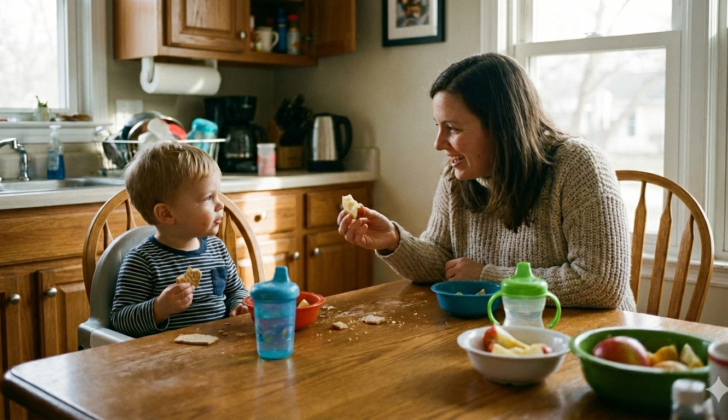
If you have ever heard your child say, “Me do it!” or “Him want a turn,” you are not alone. Pronouns are one of those language skills that can feel surprisingly tricky for young children. Parents and caregivers often tell me, “My child talks a lot, but the ‘I’ and ‘me’ thing is always wrong.” The good news is this: pronoun mix-ups are extremely common in early childhood, and most children can learn correct pronoun use with simple, consistent models in everyday life.
This article will help you understand:
- What “I” and “me” actually mean (in kid-friendly terms)
- Why children mix them up
- When you can typically expect mastery
- Red flags that may signal your child needs extra support
- Practical, realistic strategies you can use during real life (no extra homework required)
- Step-by-step activities and scripts that feel natural, not robotic
Why “I” and “Me” Are So Confusing for Kids
“I” and “me” are both pronouns that refer to the speaker (the person talking). The confusing part is that English changes the word depending on its “job” in the sentence.
The simple rule
- “I” = the doer (subject)
- “I am jumping.”
- “I want crackers.”
- “Me” = the receiver (object)
- “Pick me up.”
- “Give it to me.”
Kids are not learning grammar from a worksheet. They learn language by listening, copying, and experimenting. Many children start by using one form (“me”) as a catch-all because it gets their needs met quickly: “Me want!” “Me do!” It works, so they keep doing it until their brain is ready to fine-tune the pattern.
Another reason: children repeat what they hear
Sometimes kids copy phrases they hear directed at them:
- Adults often say: “Let me help you,” “Give it to me,” “Come with me.”
Those are correct, but a child may then try to use “me” in every position because it is familiar.
Pronouns also require “perspective shifting”
Pronouns change depending on who is talking. That is a big concept for little brains.
If a parent says, “I am cooking,” the child must understand:
- “I” means the parent right now.
But when the child speaks, “I” now means the child. That switching can take time.
When Should “I” and “Me” Be Mastered?
Children develop pronouns gradually. You may see improvement over months rather than days.
Typical development (general guideline)
- Ages 2–3: Children often begin using pronouns, but mix-ups are common (“Me do it”).
- Ages 3–4: Many children start using “I” more consistently in short sentences (“I did it!”) but may still make errors when excited, tired, or speaking in longer sentences.
- Around age 4: Many children use “I/me” correctly most of the time in everyday speech.
- By age 5: “I” and “me” are typically mastered in conversational speech for most children.
Important note: Development varies. Some children master this earlier; some need more time, especially if they have a language delay, speech/language processing differences, hearing concerns, or limited language models (for example, lots of short commands but fewer conversations).
When to Be More Concerned
Pronoun errors alone rarely tell the whole story. It is more important to look at the pattern and the overall language picture.
Consider extra support if you notice several of these:
- Your child is 4.5 to 5 years old and still uses “me” for “I” in most sentences (“Me want to go,” “Me did it”) with little improvement over time.
- Your child also struggles with other grammar skills (plural -s, past tense -ed, “he/she/they,” “is/are,” “in/on/under”).
- Your child uses very short phrases for their age and has trouble building sentences.
- Your child becomes frustrated when you do not understand them.
- You have concerns about hearing (frequent ear infections, not responding to speech, needs high volume).
- Your child learned English later or is bilingual: pronoun development may follow a different timeline, and support should be culturally and linguistically appropriate (bilingualism is not a “problem,” but it can change what is “typical”).
If you are unsure, a speech-language evaluation can clarify whether it is simply a developmental phase or part of a broader language need.
The Most Helpful Mindset: Model, Do Not Drill
Many parents try correcting like this:
- Child: “Me want it.”
- Adult: “No. Say ‘I want it.’”
This approach can work for some children, but for many it creates pressure, frustration, or shutdown, especially if they are not ready.
A more effective approach is recasting:
- You repeat the sentence correctly, naturally, without demanding a repeat.
What recasting sounds like
- Child: “Me do it!”
- Adult: “You want to do it? I do it. I can do it!”
- Child: “Pick me up.”
- Adult: “Okay, I will pick you up. You want me to pick you up.”
Recasting gives the brain repeated exposure to the correct pattern without turning your relationship into a grammar lesson.
The One Strategy That Helps the Most: Emphasize the Pronoun
When you model, slightly stress the pronoun:
- “I want the blue one.”
- “That is for me.”
- “Can you help me?”
- “I did it!”
You are not yelling it—just gently highlighting it.
Everyday Activities to Teach “I” and “Me” (No Extra Work Required)
Below are practical routines you already do. Each includes step-by-step directions and scripts you can actually use.
Activity 1: The “Help Me / I Can” Routine (Perfect for busy days)
Best for: toddlers and preschoolers who say “Me do it” or “Me help you”
When to use: getting dressed, opening snacks, cleaning up, getting in the car
Step-by-step
- Wait for a natural moment when your child needs help or wants control.
- Give two simple models:
- one with me
- one with I
- Offer a choice that prompts them to hear both forms.
Scripts
- At snack time:
- “Do you want to do it, or do you want me to help?”
- “If you do it, you can say, ‘I do it!’”
- Putting on shoes:
- “Do you want me to put them on, or can you do it?”
- “You can say, ‘I can do it.’”
- Opening a yogurt pouch:
- “You can say, ‘Help me.’”
- “Or, ‘I can try!’”
Why this works
It ties pronouns to real needs: independence (“I”) and requesting help (“me”). That is meaningful and memorable.
Activity 2: Mirror Talk While Brushing Teeth (30 seconds, daily repetition)
Best for: kids who learn well with visuals
When to use: brushing teeth, washing hands, brushing hair
Step-by-step
- Stand together in front of a mirror.
- Point to yourself and your child as you speak.
- Use short “I” sentences about actions you are doing.
- Add a few “me” sentences that are natural in the routine.
Scripts
- “Look! I am brushing.”
- “Now I spit.”
- “Can you help me with the toothpaste?”
- “You are brushing. I see you!”
- “Give it to me.” (when they hand you the toothbrush cap)
Make it engaging
Add a “silly mirror moment” once:
- “I am brushing like a bunny!”
- “I am brushing like a lion!”
Kids repeat fun lines more easily.
Activity 3: Photo Chat on Your Phone (No printing, no prep)
Best for: kids who talk more when looking at pictures
When to use: in the car, waiting rooms, before bedtime
Step-by-step
- Open a few recent photos (grocery store, playground, birthday).
- Describe what you did using I.
- Ask a question that invites your child to talk about themselves using I.
- Model “me” when appropriate.
Scripts
- “I went down the slide!”
- “That was me pushing the cart.”
- “What did you do?”
- If your child answers incorrectly:
- Child: “Me go slide.”
- Adult: “Yes! I went down the slide. I went fast!”
Extra tip
Use short repeatable sentence starters:
- “I went…”
- “I like…”
- “That is me!”
Activity 4: Turn-Taking Games With Built-In Pronouns (2 minutes)
Best for: kids who struggle during conversation but do better in structured play
When to use: blocks, cars, Play-Doh, board games, pretend play
Step-by-step
- Use clear turn language:
- “My turn / your turn” plus “I/me” models.
- Keep sentences short.
- Recast errors without pressure.
Scripts
- “I am taking my turn.”
- “Now you take your turn.”
- “You gave it to me. Thank you!”
- Child: “Me turn!”
- Adult: “Yes, my turn. Now I go. Then you go.”
Make it realistic
Even a quick game of “roll the ball” works:
- “Roll to me!”
- “Now I roll to you!”
Activity 5: The “Who Did It?” Commentary (Great for siblings)
Best for: families with more than one child
When to use: chores, playtime, snack time, art projects
Step-by-step
- Narrate who is doing what using names first.
- Then switch to pronouns.
- Have your child “report” one simple line.
Scripts
- “Mom is pouring milk. I am pouring milk.”
- “Kennedy is coloring. She is coloring.”
- “Hadley gave it to Mom. Hadley gave it to me.”
- “Tell Dad what happened: ‘I made a tower!’”
This approach supports perspective shifting and reduces confusion.
What If My Child Refuses to Say It the “Right” Way?
That is normal. Many children can understand the correct form before they can use it.
Try these supportive adjustments:
- Reduce pressure: model twice and move on.
- Do not force repetition every time.
- Pick one routine to focus on for two weeks (for example, snack time).
- Keep sentences short: “I do it.” “Help me.” These are powerful.
A gentle “try again” script (only sometimes)
If your child is in a good mood and likes copying:
- Child: “Me want juice.”
- Adult (smiling): “I want juice. Can you try it?”
If they do not repeat, simply say: - “That is okay. I want juice too!”
The goal is confidence + exposure, not perfection.
Troubleshooting: Common Pronoun Patterns and Exactly What to Say
Pattern 1: “Me do it” (instead of “I do it”)
What to say:
- “You want to do it. I do it. I can do it.”
- “Okay, you do it. I will watch.”
Pattern 2: “Give it to I” (instead of “Give it to me”)
This is also common once children learn “I” and overuse it.
What to say:
- “Give it to me. Thank you for giving it to me.”
Pattern 3: Child uses name instead of pronoun (“Ella do it”)
This is a normal early step.
What to say:
- “Yes, Ella is doing it. I am doing it.” (if the child is talking)
Or: - “You are doing it. You can say, ‘I do it.’”
A Simple Weekly Plan That Does Not Add Work
If you want structure without adding tasks, use this “one routine at a time” approach.
Week 1: Snack Time (requesting + independence)
Focus phrases:
- “I want ___.”
- “Help me.”
- “That is for me.”
Week 2: Bathroom Routine (mirror talk)
Focus phrases:
- “I am washing.”
- “I am brushing.”
- “Dry me.” (towel playfully)
Week 3: Play Routine (turn-taking)
Focus phrases:
- “Roll to me.”
- “I go.”
- “You gave it to me.”
Repeat any week as needed. Repetition is what builds mastery.
When Professional Help Can Make a Big Difference
If your child is nearing kindergarten and pronouns are still very inconsistent, or if pronoun errors come with other language concerns, an SLP can:
- Check overall language development (not just pronouns)
- Identify whether it is grammar, processing, or broader expressive language
- Teach pronouns in a playful, confidence-building way
- Give you a personalized home plan that fits your child and routines
You do not need to wait until it feels “really bad.” Early support often makes progress faster and reduces frustration for everyone.
Key Takeaways
- Pronoun mix-ups are common, especially between ages 2–4.
- “I” is the doer; “me” is the receiver.
- Many children master “I/me” most of the time by age 4 and typically by age 5.
- The best strategy is modeling and recasting, not constant correction.
- Everyday routines (snacks, bathroom, photos, play) give you all the practice you need—no extra work required.
Keep Learning & Stay Connected
Follow First Words Bright Futures on Facebook and Instagram for:
-
Daily speech tips
-
Fun activity ideas
-
Q&A with a pediatric SLP
Explore More:
- MDS: My Child Gets Frustrated When Talking: What Parents Can Do
- MDS: Why Your Child Says “Tat” Instead of “Cat”
Disclaimer: This article offers general educational information. It is not a substitute for professional evaluation or treatment. Please consult a licensed Speech-Language Pathologist for personalized concerns regarding your child’s speech development.