If you have ever found yourself standing in line while your child pushes ahead, cries, melts down, or repeatedly asks, “Is it my turn yet?”, you are not alone. For many families, waiting in public places like grocery stores, playgrounds, birthday parties, amusement parks, or school lines can feel overwhelming and exhausting.
Parents often wonder:
- Why can’t my child just wait like other kids?
- Am I doing something wrong?
- Why does this seem so much harder for my child?
The truth is, waiting is not a simple behavior. It is a complex developmental skill that requires multiple brain systems to work together. Many children simply are not developmentally ready to manage waiting in the way adults expect and that is not a failure of parenting or discipline.
This article will help you understand what is really happening beneath the behavior, why waiting is especially difficult for some children, and how you can support your child in learning this skill in a realistic, compassionate way.
Why Waiting Is So Hard for Young Children
Waiting may look simple on the outside, but internally it requires several advanced skills to happen at the same time:
- Impulse control – stopping the body from acting on a desire
- Emotional regulation – managing excitement, frustration, or disappointment
- Cognitive flexibility – shifting from “I want it now” to “I can wait”
- Understanding of time – knowing that “later” or “soon” actually means something
- Attention control – staying regulated when nothing is happening
For preschool-aged children, many of these skills are still developing. The brain areas responsible for impulse control and emotional regulation are immature and continue developing well into the elementary years.
So when a child runs to the front of a line, pushes past others, or melts down while waiting, it is rarely intentional misbehavior. More often, it is a sign that their nervous system is overwhelmed.
Why Some Children Struggle More Than Others
Not all children experience waiting in the same way. Some children are naturally more sensitive, reactive, or emotionally intense. Others struggle with transitions or sensory input. A child may have more difficulty waiting if they:
- Have big emotional reactions
- Are highly active or impulsive
- Become overstimulated by noise, crowds, or excitement
- Have difficulty expressing feelings with words
- Have experienced limited opportunities to practice waiting
- Feel anxious when routines change
Children who struggle with communication may also act out physically because they cannot yet express frustration or disappointment with words. Running, grabbing, or pushing often becomes their way of communicating, “This is too hard for me.”
Why “Just Be Patient” Rarely Works
When adults say things like:
- “Just wait your turn.”
- “Be patient.”
- “You know better.”
They are asking the child to use skills that may not yet be fully developed. This can increase stress rather than improve behavior.
A child who is overwhelmed cannot access reasoning in that moment. Their brain is in a state of protection, not learning. This is why lectures, scolding, or repeated reminders often escalate the situation instead of improving it.
Children learn to wait not through correction, but through co-regulation — when an adult helps them stay calm long enough to practice the skill.
What Actually Helps: Teaching Waiting as a Skill
1. Prepare Your Child Before the Situation Happens
Preparation is one of the most powerful tools you have.
Before entering a situation where waiting is required, preview what will happen:
- “We are going to stand in line.”
- “There will be other kids in front of us.”
- “When it’s our turn, we will go together.”
You can also describe what your child can do while waiting:
- “You can hold my hand.”
- “You can look for red things while we wait.”
- “You can tell me when you see the sign.”
This gives your child a plan, which lowers anxiety.
2. Give the Body Something to Do
A child who is expected to stand still with no outlet is far more likely to struggle.
Helpful strategies include:
- Holding a small object or fidget
- Standing on a designated “spot”
- Squeezing a parent’s hand
- Counting people or objects
- Rocking gently or shifting weight
These strategies help regulate the nervous system without disrupting others.
- Use Language That Regulates Instead of Corrects
What you say matters, especially in the moment.
Try using calm, validating language such as:
- “I see this is hard.”
- “Your body wants to move fast right now.”
- “I’m here. We’ll get through this together.”
This does not mean you are allowing unsafe behavior. It means you are helping your child feel understood so they can regain control.
4. Practice Waiting in Low-Stress Moments
Waiting skills grow through repetition in low-pressure settings.
Practice waiting:
- Before opening a snack
- Before starting a favorite show
- Before going outside
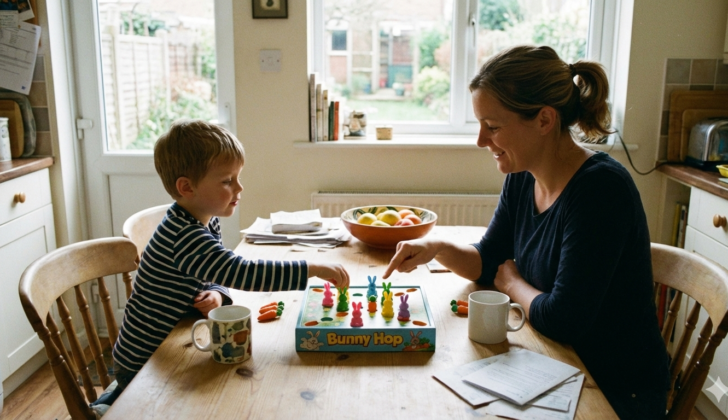
- During simple turn-taking games
Start with very short waits (a few seconds) and slowly increase over time. Celebrate effort, not perfection.
5. Reinforce Effort, Not Just Success
Children learn best when their effort is noticed.
Helpful phrases include:
- “You waited even though it was hard.”
- “You stayed with me — that was great self-control.”
- “I saw you take a deep breath to help your body.”
This builds confidence and encourages future success.
When to Seek Additional Support
If your child:
- Regularly has intense meltdowns during waiting
- Pushes, hits, or runs away during transitions
- Becomes overwhelmed in many public settings
- Has difficulty calming down even with support
It may be helpful to consult with a speech-language pathologist, occupational therapist, or early childhood professional. These specialists can help identify underlying regulation challenges and provide strategies tailored to your child’s needs.
Support does not mean something is “wrong.” It means you are giving your child tools early, when learning is most effective.
A Final Word of Reassurance
Waiting is not a moral skill. It is not a reflection of your parenting or your child’s character. It is a developmental skill that takes time, patience, and practice.
Every moment you stay calm, guide your child, and offer support is helping their brain learn how to regulate, cope, and grow.
You are not failing, you are teaching.
Keep Learning & Stay Connected
Follow First Words Bright Futures on Facebook and Instagram for:
-
Daily speech tips
-
Fun activity ideas
-
Q&A with a pediatric SLP
Explore More:
- MDS: When Behavior Is Really a Communication Struggle
- MDS: Oral Motor Skills and Speech: What Parents Need to Know
Disclaimer: This article offers general educational information. It is not a substitute for professional evaluation or treatment. Please consult a licensed Speech-Language Pathologist for personalized concerns regarding your child’s speech development.