If your child is having trouble talking, listening, or paying attention, you might be wondering what is going on.
Maybe you have heard things like:
- “They just need to focus more.”
- “They are not listening.”
- “They will talk when they are ready.”
Here is something many families are not told:
A child’s sensory system plays a huge role in how they communicate. If the body does not feel right, the brain has a hard time focusing on speech, language, and learning.
First, what is sensory processing?
Sensory processing is how your child:
- Takes in information from their body and environment
- Understands that information
- Responds to it
This includes all eight senses, not just the basic five.
When this system is working smoothly, your child can:
- Sit and attend
- Listen to language
- Understand directions
- Use their body to communicate
When it is not working smoothly, things can feel overwhelming, confusing, or even uncomfortable.That is when we start to see challenges.
Let us connect this to speech and language
Many people think speech and language are just about words.
Before a child can talk, they need to:
- Be regulated
- Pay attention
- Process what they hear
- Feel comfortable enough to interact
If any of those pieces are off, communication becomes harder.
1. When the body is dysregulated, communication slows down
What skill we are targeting
Helping your child feel calm and organized in their body
Why it matters for communication
If your child feels:
- Too wiggly
- Too overwhelmed
- Too tired or shut down
Their brain is focused on fixing that feeling.
Not on talking.
Not on listening.
What this looks like
You might see:
- Constant movement
- Difficulty sitting
- Big reactions
- Zoning out
What to do
Instead of jumping straight into speech or learning tasks, start with the body. Give your child input first. For example, before sitting down for a book, you can do a quick movement activity. Have your child push a laundry basket, carry something heavy, or do a few jumps.
What to say
“Push, push, push.”
“You are strong.”
“Now we sit.”
You are helping the body get ready so the brain can focus.
2. If your child is not attending, they are not learning language
What skill we are targeting
Joint attention and focus
Why it matters for communication
Children learn language by:
- Watching
- Listening
- Sharing attention with others
If attention is not there, language does not stick.
What this looks like
- Your child does not respond to their name
- They move quickly from one thing to another
- They do not stay with an activity
What to do
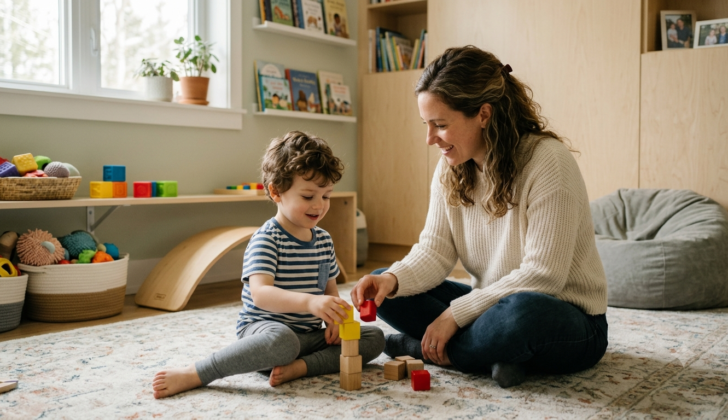
Follow your child’s lead and build attention through what they already enjoy. If your child loves cars, sit with them and join in.
What to say
“Car go.”
“Fast car.”
“Ready… go!”
Keep it simple and matched to what they are doing. You are not trying to control the activity. You are joining it. That is where attention grows.
3. Sensory overload can look like “not listening”
What skill we are targeting
Listening and processing language
Why it matters for communication
If your child is overwhelmed by:
- Noise
- Movement
- Too many directions
They may not be able to process what you are saying.
What this looks like
- Ignoring directions
- Meltdowns in busy places
- Covering ears
- Looking like they are not listening
What to do
Reduce the sensory load before giving language. Get close. Use fewer words. Say things once.
What to say
“Shoes on.”
“Come here.”
“Sit.”
Short, clear language is easier to process.
4. Body awareness impacts speech production
This one surprises a lot of families.
What skill we are targeting
Awareness and control of the body, including the mouth
Why it matters for communication
Your child needs body awareness to:
- Move their mouth to make sounds
- Imitate movements
- Coordinate speech
What this looks like
- Difficulty imitating sounds
- Sloppy or unclear speech
- Trouble copying actions
What to do
Use whole-body activities first. Clapping, stomping, and big movements help organize the body. Then bring it down to mouth.
What to say
“Clap, clap.”
“Stomp, stomp.”
“Now lips. Mmm.”
You are building awareness from big to small.
5. Sensory needs impact emotional regulation and communication
What skill we are targeting
Recognizing and expressing needs
Why it matters for communication
If your child cannot:
- Feel what is happening in their body
- Understand their emotions
They will show it through behavior instead of words.
What this looks like
- Meltdowns
- Hitting or throwing
- Shutting down
What to do
Start labeling body and feelings in everyday moments.
What to say
“My body feels tired.”
“I feel frustrated.”
“Do you need a break?”
Even if your child does not respond yet, they are learning the words for their experience.
What this looks like in real life
You do not need a perfect routine or situation. Think of these situations.
Your child is running around before dinner. You have them push a chair and then sit.
Your child is not listening. You get close and use fewer words.
Your child is overwhelmed. You step outside and reset.
Your child is playing. You join and add simple language.
These are the moments that build communication.
Final thoughts
If your child is struggling with speech, language, or attention, it is easy to think:
“They are not trying.”
“They are not listening.”
Often, their body is not ready.
When we support the sensory system, we help the brain feel safe, organized, and ready to learn.When that happens, communication starts to grow. You do not need to do everything.
Start with one small change:
- Add movement before learning
- Use simple language
- Follow your child’s lead
That is where progress begins.
Keep Learning & Stay Connected
Follow First Words Bright Futures on Facebook and Instagram for:
-
Daily speech tips
-
Fun activity ideas
-
Q&A with a pediatric SLP
Explore More:
- MDS: How to Give Specific Praise to Support Your Child’s Communication Skills
- MDS: How to Use Mirrors to Improve Your Child’s Speech
Disclaimer: This article offers general educational information. It is not a substitute for professional evaluation or treatment. Please consult a licensed Speech-Language Pathologist for personalized concerns regarding your child’s speech development.