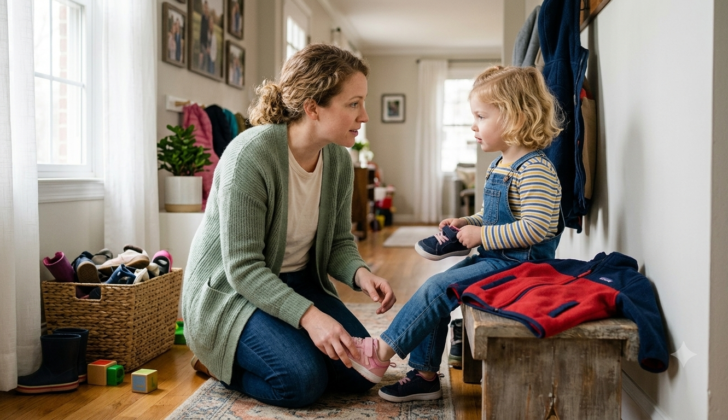
If your child can follow one direction, but seems to fall apart when given two or three, you are not alone. Many parents notice this shift. A child who can easily respond to “Get your shoes” may struggle when asked, “Get your shoes, put them by the door, and grab your jacket.”
It can feel confusing. You might wonder if your child is not paying attention, choosing not to listen, or simply moving too quickly. In many cases, the challenge is not behavior. It is memory and processing.
Following multi-step directions requires a child to hold onto information, remember the order, and act on it. That is a big task for a developing brain. The good news is that this skill can be strengthened with simple, intentional strategies woven into everyday life.
Why Multi-Step Directions Are Hard
When a child hears a multi-step direction, several things need to happen at once. They must listen carefully, understand the language, remember each part, and then carry it out in the correct order.
For young children, this can feel overwhelming. They may remember the first part and forget the rest, or they may jump to the last part they heard. Sometimes they start the task and then stop midway because the remaining steps have faded from memory.
This is especially common in preschool and early elementary years, when working memory is still developing. What may seem simple to an adult can feel like juggling multiple pieces of information for a child.
Start Where Your Child Is
Before expecting your child to follow multiple steps, it is important to know what they can handle right now. If two-step directions are difficult, that is your starting point. Building this skill is a process, not a jump.
Begin with success. When a child feels successful, they are more likely to stay engaged and try again.
You might start with something like,
“Get your shoes and bring them to me.”
If that feels manageable, you can slowly increase the challenge over time.
Make Directions Clear and Manageable
One of the most helpful shifts is how directions are given. Long or complicated sentences can make it harder for a child to hold onto information.
Instead, use clear, simple language with natural pauses.
For example, rather than saying,
“Go upstairs, get your pajamas, brush your teeth, and come back down,”
you might say,
“Go upstairs. Get your pajamas. Then come back down.”
Breaking directions into chunks gives your child a better chance to process and remember each part.
It is also helpful to get your child’s attention before speaking. Saying their name and making sure they are looking or listening can make a noticeable difference.
You might say,
“Listen carefully. I am going to give you two things to do.”
This prepares your child to focus and signals that something important is coming.
Use “First, Then, Last” to Build Structure
Children benefit from hearing directions in a predictable format. Using words like “first,” “then,” and “last” helps organize information in a way that is easier to follow.
For example,
“First get your backpack, then put on your shoes, and last stand by the door.”
You can support this visually by holding up fingers as you speak. One finger for “first,” two for “then,” three for “last.” This adds a visual cue to support memory.
Over time, this structure helps children begin to mentally organize steps on their own.
Repeat Back to Strengthen Memory
One of the most effective strategies is having your child repeat the directions back to you. This simple step helps move information from hearing into memory.
After giving directions, you might ask,
“Tell me what you are going to do.”
If your child struggles, you can guide them:
“What is the first thing?”
“And then what?”
This is not meant to feel like a test. It is a support. With practice, children become more confident and accurate.
Turn Directions Into a Game
When something feels like play, children are more motivated to participate and less likely to feel overwhelmed.
You can turn multi-step directions into a “mission.”
For example,
“I have a mission for you. Listen carefully. Get the red block, put it on the table, and then clap your hands.”
Adding a playful tone and a sense of purpose increases engagement. You can even pretend to be a “coach” or “game leader” guiding your child through the steps.
Another fun option is to use movement-based directions.
You might say,
“Hop to the couch, touch the pillow, and then spin around.”
Movement helps anchor memory and keeps children engaged, especially those who have difficulty sitting still.
Use Visual Supports When Needed
Some children benefit from seeing the steps rather than only hearing them. This does not have to be complicated.
You can:
- Point to objects as you give directions
- Lay out items in order
- Use simple drawings or pictures
For example, if your child needs to get dressed, you might place their clothes in order and say,
“First shirt, then pants, then socks.”
This reduces the memory load and provides a clear guide.
Build Memory Through Everyday Routines
You do not need special activities to practice this skill. Daily routines are full of opportunities.
During mealtime, you might say,
“Get your plate, put it on the table, and grab your fork.”
During cleanup,
“Pick up the blocks, put them in the bin, and close the lid.”
During bedtime,
“Get your pajamas, brush your teeth, and come to your room.”
These repeated routines help children learn patterns and strengthen their ability to remember multiple steps.
When Your Child Gets Stuck
Even with support, there will be times when your child forgets or only completes part of the direction. This is expected. The way you respond in these moments can make a big difference.
Instead of repeating the entire direction quickly or showing frustration, pause and guide your child back.
You might say,
“You got your shoes. What comes next?”
If needed, offer a gentle reminder:
“Now put them by the door.”
Breaking it down in the moment helps your child stay successful without feeling overwhelmed.
Gradually Increase the Challenge
As your child becomes more comfortable, you can slowly increase the number of steps. Move from one step, to two, to three. There is no need to rush.
You can also increase complexity by:
- Adding new vocabulary
- Changing the order
- Including descriptive words (color, size, location)
For example,
“Get the blue cup from the counter, put it next to your plate, and then sit down.”
This builds both memory and language skills at the same time.
What Progress Looks Like
Progress may be subtle at first. You might notice your child remembering more of the steps, needing fewer reminders, or completing tasks with greater independence.
Over time, these small gains lead to bigger changes. Your child becomes more confident, more capable, and more independent in daily routines.
Final Thoughts
Helping your child remember multi-step directions is not about expecting perfection. It is about building skills step by step in a supportive and playful way.
When you:
- Adjust your language
- Add structure
- Use repetition and visual support
- Turn directions into engaging moments
You are helping your child develop the ability to listen, remember, and follow through.
These are skills that extend far beyond childhood. They support learning in school, independence at home, and confidence in everyday life…
Keep Learning & Stay Connected
Follow First Words Bright Futures on Facebook and Instagram for:
-
Daily speech tips
-
Fun activity ideas
-
Q&A with a pediatric SLP
Explore More:
- MDS: How to Give Specific Praise to Support Your Child’s Communication Skills
- MDS: How to Use Mirrors to Improve Your Child’s Speech
Disclaimer: This article offers general educational information. It is not a substitute for professional evaluation or treatment. Please consult a licensed Speech-Language Pathologist for personalized concerns regarding your child’s speech development.