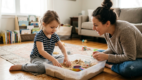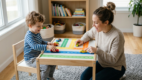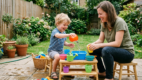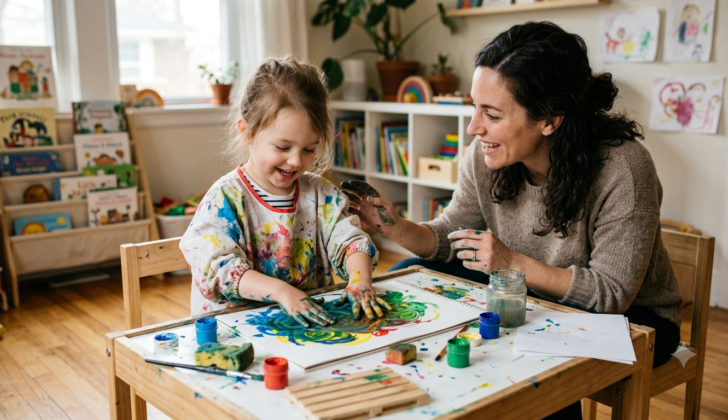
There is something different about the way children interact with art when they are truly allowed to explore it. A child dips both hands into paint instead of carefully using the brush. Another presses crayons so hard they snap. Some children swirl colors together just to watch what happens, while others spend ten straight minutes peeling stickers or rolling glue sticks back and forth across paper. To adults, art activities sometimes look messy, random, or purely creative, but underneath all of that painting, squeezing, stamping, gluing, tearing, and coloring, children are learning something much bigger than how to make a craft. They are learning language.
In earlier articles, we explored how sensory play supports requesting, action words, describing language, and early sentence development through activities like water play, sensory bins, and movement. This article builds on those ideas in a new direction by focusing specifically on sensory art experiences and how they naturally support communication.
Art activities are full of opportunities for children to:
- hear new vocabulary,
- experience textures,
- learn color concepts,
- use action words,
- expand sentences,
- and participate in conversations.
Sensory art often slows children down in a way that encourages interaction and shared attention. Children are not just creating something. They are also experiencing it.
Why Art Activities Support Language So Well
Art naturally combines:
- movement,
- sensory exploration,
- visual learning,
- creativity,
- and interaction.
That combination creates great opportunities for communication. Children often stay engaged longer during sensory art activities because they are:
- curious,
- emotionally connected,
- and actively participating.
When children are interested and regulated, language learning becomes much easier. Art activities also provide something incredibly important for language development: shared experiences. You and your child are looking at, touching, creating, and reacting to the same thing together. That shared focus creates natural opportunities for conversation.
Art Activities Naturally Encourage Rich Vocabulary
Many toys encourage labeling:
- car,
- ball,
- dog,
- block.
Art activities naturally encourage more complex language because children experience:
- textures,
- colors,
- movement,
- shapes,
- changes,
- and emotions.
During sensory art, children may hear words like:
- squishy,
- sticky,
- smooth,
- rough,
- bright,
- dark,
- drip,
- roll,
- smear,
- mix,
- squeeze,
- swirl.
These words are meaningful because children can physically experience them while hearing them used repeatedly. Children learn vocabulary best when words connect to real experiences.
The Goal Is Interaction, Not Perfect Crafts
This is important to remember. The value of sensory art is not creating Pinterest-perfect projects. Many children learn the most when activities are open-ended and process-focused instead of product-focused.
The communication happens during:
- the exploring,
- the experimenting,
- the reacting,
- and the shared interaction.
Some children may barely create an actual “picture” at all. That is okay. The goal is connection and communication, not perfection.
Texture Words Become Meaningful Through Art
One of the most powerful parts of sensory art is how naturally it introduces texture vocabulary. Children are not just hearing words like:
- sticky,
- bumpy,
- smooth,
- soft,
- rough.
They are feeling them. That sensory connection helps vocabulary stick much more effectively than memorization alone.
For example:
- Puffy paint may feel squishy.
- Tissue paper may feel soft.
- Sandpaper may feel rough.
- Glue may feel sticky.
- Cotton balls may feel fluffy.
These experiences create endless opportunities for meaningful language.
Action Words Come Naturally During Art
Art activities are filled with movement and action.
Children:
- squeeze,
- paint,
- dip,
- tear,
- cut,
- roll,
- press,
- stamp,
- glue,
- peel,
- mix,
- and shake.
Those repetitive actions create excellent opportunities for teaching verbs naturally.
For example:
“You are squeezing the paint.”
“Dip the brush.”
“Roll the dough.”
“Mix the colors.”
“Stamp the paper.”
The repetition of actions helps children connect words to experiences over and over again.
Color Vocabulary Becomes More Meaningful Too
Children often learn colors more effectively during meaningful activities than through flashcards. During art, colors become interactive and exciting.
Children notice:
- bright colors,
- dark colors,
- mixed colors,
- favorite colors,
- and changing colors.
For example:
“You mixed blue and yellow.”
“Now it turned green!”
“That paint is bright red.”
The excitement of watching colors change often increases engagement and attention.
Narrating the Experience Is More Powerful Than Constant Questions
Many adults unintentionally turn art into a quiz.
“What color is this?”
“What shape did you make?”
“What is that supposed to be?”
Occasional questions are fine, too many can interrupt interaction and reduce communication. Instead, try narrating more often. You can simply describe what is happening:
“You are making long lines.”
“That paint feels sticky.”
“You mixed the colors together.”
“The glue is dripping.”
This keeps the interaction relaxed and conversational.
Sensory Art Ideas That Support Language Development
Finger Painting
Finger painting is one of the richest sensory art experiences for language development because children directly feel the textures and movement.
Language Opportunities
- smooth
- slippery
- cold
- squish
- smear
- mix
- paint
- swirl
Parent Scripts
“You are smearing the paint.”
“That feels slippery.”
“You made big circles.”
“The colors are mixing together.”
Children often stay engaged longer when they can freely explore without worrying about making a “correct” picture.
Sticker Collages
Sticker activities are wonderful for children who enjoy fine motor play but may not like messier textures.
Language Opportunities
- peel
- stick
- pull
- push
- little
- big
- shiny
- colorful
Parent Scripts
“Peel the sticker off.”
“You stuck it on!”
“That is a tiny star.”
“The dinosaur sticker is huge.”
Sticker play also creates natural opportunities for requesting and commenting.
Painting With Unusual Tools
Children become highly engaged when painting with something unexpected.
Try:
- sponges,
- toy cars,
- cotton balls,
- feathers,
- toothbrushes,
- or leaves.
Language Opportunities
- stamp
- roll
- dab
- press
- rough
- soft
- bumpy
Parent Scripts
“The sponge makes dots.”
“You rolled the car through the paint.”
“That feather feels soft.”
These activities also naturally encourage comparing textures and patterns.
Torn Paper Art
Tearing paper is excellent sensory input for many children.
Skills Supported
- fine motor strength,
- attention,
- sequencing,
- and descriptive language.
Language Opportunities
- tear
- rip
- little
- big
- crunchy
- glue
- sticky
Parent Scripts
“You ripped the paper.”
“That piece is tiny.”
“The glue feels sticky.”
“You made a big pile.”
Puffy Paint or Foam Art
Activities using shaving cream, whipped soap, or puffy paint create strong sensory experiences that naturally encourage descriptive vocabulary.
Language Opportunities
- fluffy
- squishy
- soft
- cold
- messy
- smooth
Parent Scripts
“That paint feels fluffy.”
“You squished it!”
“It looks soft like clouds.”
Even children who are hesitant initially often become curious once they see adults exploring the textures too.
Playdough Art Creations
Playdough combines sensory play, pretend play, and creativity all at once.
Language Opportunities
- roll
- squish
- flatten
- cut
- poke
- long
- short
- soft
Parent Scripts
“You rolled a long snake.”
“Now squish it flat.”
“That dough feels soft.”
Playdough also naturally supports expanding utterances:
- “Big ball.”
- “Long snake.”
- “Blue cookie.”
Painting on Different Surfaces
Changing the surface alone can create exciting new sensory experiences.
Try painting on:
- cardboard,
- foil,
- windows,
- paper bags,
- sidewalks,
- or bubble wrap.
Language Opportunities
- shiny
- rough
- smooth
- bumpy
- slippery
Parent Scripts
“The foil looks shiny.”
“The bubble wrap feels bumpy.”
“The paint slides on the window.”
These changes encourage children to notice and describe differences.
Repetition Helps Language Grow
Children often repeat the same art actions over and over:
- dip,
- paint,
- squeeze,
- stamp,
- peel.
That repetition is incredibly valuable for language development.
Hearing:
“Dip the brush.”
“You dipped it.”
“More dipping!”
helps children connect language to action through repeated experiences. This is how vocabulary becomes meaningful and usable.
Follow Your Child’s Sensory Preferences
Some children love messy art. Others strongly dislike sticky textures or wet hands. Children do not need to participate in every sensory experience immediately.
You can:
- offer tools instead of fingers,
- start with dry textures,
- allow observation first,
- and gradually build comfort over time.
The goal is positive interaction, not forcing participation.
Sensory Art Also Supports Social Communication
Art activities naturally encourage:
- turn taking,
- commenting,
- requesting,
- shared attention,
- and conversation.
Children often communicate more when adults sit alongside them, join the activity, and react genuinely to what they are creating.
Simple comments like:
“Wow, you made so many dots!”
“That is a huge line!”
“You mixed all the colors!”
help build interaction naturally.
Everyday Art Experiences Count Too
Sensory art does not need to happen only during structured activities. Children experience creative sensory play during:
- coloring,
- sidewalk chalk,
- helping bake,
- decorating cookies,
- drawing in sand,
- painting with water outside,
- and even helping wrap gifts.
Simple moments repeated consistently often create the richest opportunities for language growth.
Final Thoughts
Sensory art activities offer much more than creative expression. They create opportunities for children to:
- hear rich vocabulary,
- experience textures,
- learn action words,
- explore colors,
- build sentences,
- and connect language to meaningful experiences.
Children learn language best during shared moments of curiosity, interaction, and play. You do not need perfect crafts or elaborate activities.
You simply need:
- playful interaction,
- repetition,
- simple language models,
- and the willingness to explore alongside your child.
Sometimes the most meaningful communication happens with paint-covered fingers, torn paper scraps, and a child proudly saying, “Look what I made.”
Keep Learning & Stay Connected
Follow First Words Bright Futures on Facebook and Instagram for:
-
Daily speech tips
-
Fun activity ideas
-
Q&A with a pediatric SLP
Explore More:
- MDS: How to Give Specific Praise to Support Your Child’s Communication Skills
- MDS: How to Use Mirrors to Improve Your Child’s Speech
Disclaimer: This article offers general educational information. It is not a substitute for professional evaluation or treatment. Please consult a licensed Speech-Language Pathologist for personalized concerns regarding your child’s speech development.