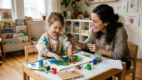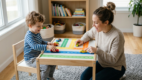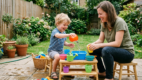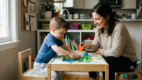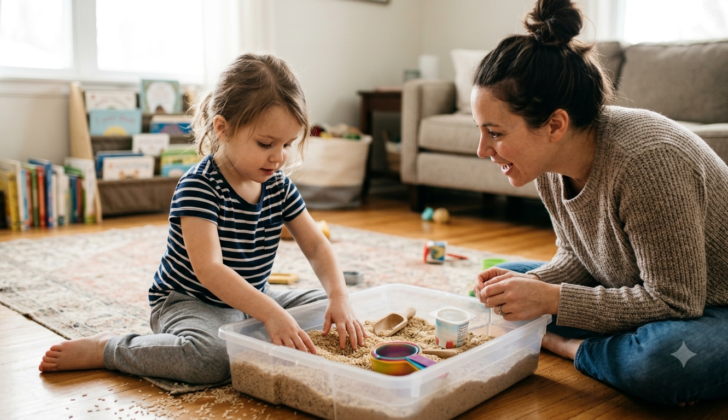
A child who ignores a toy shelf full of activities may spend twenty uninterrupted minutes scooping rice from one cup to another. Another child may run their fingers through sand over and over again, completely focused. Some children bury tiny toys in beans just to find them again moments later. To adults, these activities can seem simple. Repetitive, even. Underneath all of that scooping, pouring, digging, and exploring, something important is happening. Children are learning how to describe the world around them.
In earlier sensory play articles, we talked about how sensory activities can support requesting, action words, and early sentence development. This article builds on those ideas in a different way by focusing specifically on describing language. Once children begin using words to label objects and actions, the next big step is learning how to add details.
Not just:
“Rice.”
But:
“Cold rice.”
“Tiny rice.”
“White rice.”
Not just:
“Bean.”
But:
“Hard bean.”
“Big bean.”
“Smooth bean.”
Those little details are what help language become richer, clearer, and more meaningful. Sensory play creates one of the most natural opportunities to teach them.
Why Describing Words Matter So Much
When children first begin communicating, they often use simple labels:
- car,
- dog,
- cup,
- ball.
Those words are important. They help children identify and request things in their environment. Communication grows significantly once children begin adding descriptive language.
Describing words help children explain:
- what something feels like,
- what it looks like,
- how it compares,
- and why it is different from something else.
This type of language helps children:
- tell stories,
- answer questions,
- explain experiences,
- and participate in conversations more successfully.
Imagine the difference between a child saying:
“I found it!”
versus:
“I found the tiny blue one!”
Or:
“The sand.”
versus:
“The warm soft sand.”
Those added details help children communicate much more clearly. Describing language also supports later academic skills like:
- reading comprehension,
- writing,
- sequencing,
- storytelling,
- and classroom discussions.
Why Sensory Play Makes Describing Easier
Children learn language best when words are connected to real experiences. This is one reason sensory play is so effective for vocabulary development. When a child hears the word soft while actually feeling soft sand run through their fingers, the word becomes meaningful in a completely different way.
The same is true for:
- rough,
- smooth,
- heavy,
- light,
- cold,
- sticky,
- dry,
- bumpy,
- tiny,
- full,
- empty.
Sensory activities allow children to physically experience the meaning of words while hearing them repeated naturally. That combination is powerful for language learning.
The Goal Is Not Perfect Responses
One important thing to remember is that sensory play should not feel like a vocabulary test.
Children learn best when adults:
- join the play,
- model language naturally,
- repeat words often,
- and interact without pressure.
Sometimes adults unintentionally turn language activities into constant questioning:
“What color is that?”
“What does it feel like?”
“What size is it?”
“What is this called?”
While questions can certainly have a place, too many questions can make children shut down or lose interest. Instead, think about becoming more of a narrator during play. You are describing the experience alongside your child.
Sensory Play Naturally Encourages Comparison
One reason sand, rice, and beans work so well for descriptive language is because they are all different from one another.
Children can:
- compare textures,
- notice sizes,
- feel weights,
- observe sounds,
- and experience movement differences.
For example:
- Sand may feel soft and fine.
- Rice may feel smooth and tiny.
- Beans may feel hard and bumpy.
Those natural contrasts create endless opportunities for language. Children often begin noticing differences on their own once adults start modeling the words repeatedly.
A Child Does Not Need to Repeat the Words Immediately
This is important. Many children need to hear words repeatedly before they begin using them independently. So if you say:
“The beans feel hard.” and your child does not repeat “hard,” that does not mean the learning is not happening. Children absorb enormous amounts of language through exposure and interaction. The goal is not immediate performance. The goal is building understanding over time.
How to Model Describing Words Naturally
One of the easiest strategies is simply talking about what your child is already experiencing.
For example:
“The rice feels smooth.”
“Those beans are heavy.”
“That sand is warm.”
“You found the tiny scoop.”
“The bucket is full!”
Notice how natural those phrases sound. You are not forcing a response. You are layering language into the activity. When children actively experience the textures and actions, the words become more memorable.
Building Richer Sentences Through Sensory Play
Once children begin using single descriptive words, adults can help gently expand language.
For example:
| Child Says | Adult Expands To |
| “Bean” | “Big bean” |
| “Cold” | “Cold water” |
| “Sand” | “Soft sand” |
| “Rice” | “Tiny rice” |
Over time, these combinations can continue growing:
- “Big brown bean.”
- “Cold wet sand.”
- “The rice is smooth.”
Language develops little by little.
Sand Play Ideas for Descriptive Language
Sand naturally encourages vocabulary related to:
- texture,
- temperature,
- size,
- and movement.
Children can:
- dig,
- scoop,
- bury,
- pour,
- and build.
Words to Model
- soft
- warm
- dry
- rough
- smooth
- heavy
- light
- deep
- little
- big
Natural Parent Scripts
“The sand feels soft.”
“You made a big pile.”
“That bucket is heavy.”
“The sand is dry over here.”
You do not need perfect conversations. Small comments repeated often are incredibly valuable.
Rice Bin Ideas for Descriptive Language
Rice is wonderful because it creates a very different sensory experience than sand.
Children often notice:
- the sound,
- the movement,
- and the tiny texture.
Words to Model
- tiny
- smooth
- loud
- quiet
- full
- empty
- fast
- slow
Parent Scripts
“The rice sounds loud!”
“You filled the cup.”
“That scoop is empty now.”
“The rice is falling fast.”
Rice activities are also wonderful for introducing comparison words:
- more,
- less,
- bigger,
- smaller.
Bean Bin Ideas for Descriptive Language
Beans provide a completely different texture and weight than rice or sand.
They often feel:
- harder,
- bumpier,
- and heavier.
Words to Model
- hard
- bumpy
- heavy
- big
- little
- full
- empty
Parent Scripts
“The beans feel hard.”
“That container is full.”
“You found the little spoon.”
“The big scoop holds more.”
The repetition of these descriptive words throughout play helps children begin understanding and eventually using them more independently.
Comparisons Build Stronger Language Skills
One powerful strategy is comparing materials directly.
For example:
“The rice feels smoother than the beans.”
“The beans are bigger.”
“The sand feels softer.”
These comparison words are important for:
- conversations,
- storytelling,
- classroom learning,
- and later academic language.
Even very young children can begin hearing and understanding simple comparisons during play.
Follow Your Child’s Interests
Some children love pouring. Others love burying objects. Some simply enjoy running their hands through the textures repeatedly. That is okay. You do not need to constantly redirect the activity into “teaching mode.” Children often learn the most language when they feel relaxed, engaged, and interested in what they are doing. Join their play first and add language second.
Repetition Is What Helps Vocabulary Stick
Children usually need to hear words many times in many different situations before using them consistently.
That means hearing:
- “soft sand,”
- “soft blanket,”
- “soft puppy,”
helps children truly understand what soft means. Sensory play provides rich opportunities for repeating descriptive language naturally. Repetition through meaningful experiences is much more powerful than memorization alone.
Sensory Play Also Supports Conversation Skills
While children are exploring sensory materials, they are often also practicing:
- turn taking,
- listening,
- requesting,
- answering questions,
- and shared attention.
These social communication skills are deeply connected to language development too. Sensory play creates opportunities for children to stay engaged longer and interact more naturally with others.
You Do Not Need Elaborate Setups
This is worth repeating. Children do not need perfectly themed sensory bins from social media. A simple container with:
- rice,
- beans,
- or sand,
plus a few scoops and containers can create endless opportunities for communication.
Everyday Moments Count Too
Describing language does not only happen during sensory bins. Children hear and learn descriptive words during:
- baking,
- bath time,
- gardening,
- grocery shopping,
- outdoor walks,
- and daily routines.
The more children hear descriptive language connected to real experiences, the more meaningful those words become.
Final Thoughts
Sensory play creates far more than entertainment for children. It creates opportunities to:
- notice,
- compare,
- describe,
- communicate,
- and connect language to real experiences.
Sand, rice, and beans may seem simple, but they offer rich opportunities for helping children build more detailed and meaningful language. Children often learn best when they do not even realize they are learning. They are simply digging, pouring, scooping, and exploring the world around them while language grows naturally through playful connection and shared experiences.
Keep Learning & Stay Connected
Follow First Words Bright Futures on Facebook and Instagram for:
-
Daily speech tips
-
Fun activity ideas
-
Q&A with a pediatric SLP
Explore More:
- MDS: How to Teach Describing Words Through Play
- MDS: Sensory Play Activities That Support Speech and Language
Disclaimer: This article offers general educational information. It is not a substitute for professional evaluation or treatment. Please consult a licensed Speech-Language Pathologist for personalized concerns regarding your child’s speech development.