In our last article, we explored simple sensory strategies that can help children calm their bodies during moments of overwhelm. We talked about how movement, deep pressure, heavy work, and other sensory supports can help children navigate big feelings. We briefly introduced the idea of a calm-down corner or cozy space at home, which is a dedicated spot where children can go to rest, reset, and reconnect.
If you found yourself thinking, That sounds wonderful, but how do I actually create one? you are not alone.
Parents often tell me they love the idea, but they have no idea where to start. They wonder if they need expensive sensory equipment, a spare room in their home, or a perfectly styled Pinterest-worthy setup. Others worry that their child will refuse to use it, fight with siblings over it, or turn it into another place to dump toys.
The good news is that children do not need perfection. They need predictability. They need a space that feels safe, comforting, and designed with their unique needs in mind.
A calm-down corner is not about preventing every tantrum, meltdown, or difficult moment. Children will still become frustrated. They will still feel disappointed. They will still have hard days. The goal is something much bigger. It is teaching children that all feelings are acceptable, that their bodies send important messages, and that there are supportive ways to respond when those feelings become overwhelming.
What Is a Calm-Down Corner?
Before we dive into how to create one, it is important to understand what a calm-down corner actually is and what it is not. A calm-down corner is a space designed to support emotional regulation. It is where children can go to help their bodies settle when they are overwhelmed, overstimulated, angry, frustrated, anxious, or simply in need of a break.
It is not a timeout.
It is not a punishment.
It is not a place children are sent because they have been “bad.”
Instead, think of it as an emotional first-aid kit.
When your child scrapes their knee, you reach for a bandage and a hug. When your child’s nervous system feels overloaded, the cozy corner offers tools that help them recover.
Over time, children begin to recognize the signs that their bodies need support. Eventually, many will independently say things like, “I think I need a break,” or “Can I sit in my cozy spot for a few minutes?” That awareness does not happen overnight. It develops through repeated experiences of being supported by caring adults. In the beginning, your child will borrow your calm before they learn to create their own.
Choosing the Right Spot in Your Home
One of the biggest misconceptions about calm-down corners is that they require an entire room. Some of the most effective cozy spaces I have seen have been tucked into ordinary corners of everyday family life. Think if a preschooler curled up beside a bookshelf in the family room. A little boy who loved who gets cozy under his loft bed. A toddler sitting in a small tent in the playroom. A child who naturally sat in a quiet corner of her bedroom after school.
Before you move furniture or purchase supplies, spend a few days simply observing your child.
Ask yourself:
- Where do they naturally go when they are upset?
- Do they seek out small enclosed spaces?
- Do they hide under blankets?
- Do they retreat to their bedrooms?
- Do they come looking for hugs and closeness?
Children often tell us what they need through their behavior. A child who crawls underneath the kitchen table after a long day may be craving a smaller, quieter environment. Another child who sits pressed tightly between couch cushions may be seeking deep pressure. Rather than fighting those instincts, use them as clues.
Some great options include:
- A corner of the family room
- A section of your child’s bedroom
- A reading nook
- Under a loft bed
- A small pop-up tent
- Space beneath a staircase
- An unused closet with the door removed or left open
- A quiet area of the playroom
Try to avoid spaces already associated with punishment. If your child sits in a certain chair for discipline, that chair should not suddenly become the cozy corner. Likewise, avoid busy hallways or high-traffic areas where siblings constantly run through.
The space should communicate one simple message:
“You are safe here.”
You Do Not Need a Pinterest-Worthy Setup
Social media has a way of making parents feel as though they need to do more. More decorations. More sensory equipment. More expensive products.
Please hear this: Your child does not need perfection. They need comfort.
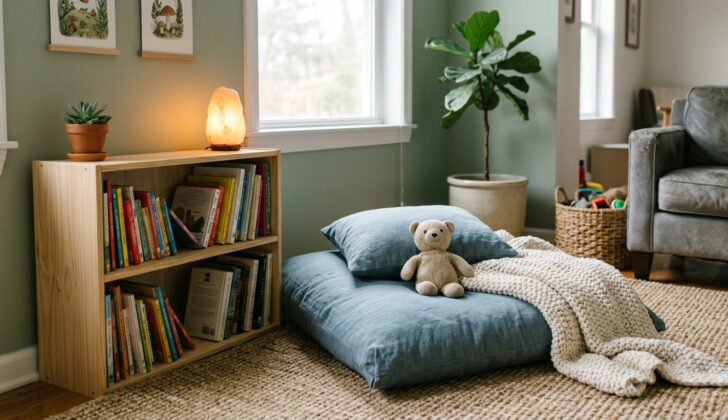
One family’s cozy corner may include a beanbag chair, soft lighting, and matching storage baskets. Another family’s space may consist of two couch pillows, a blanket, and a basket of books beside the fireplace. Both can be equally effective. Start with what you already have. You can always add more later.
What Should You Include?
The best calm-down corners reflect the individual child using them. Instead of filling the space with every sensory tool you can find online, think about what already helps your child feel better.
Does your child ask to be wrapped tightly in blankets? Do they love being squeezed during bear hugs? Are they constantly moving? Do they cover their ears in noisy environments? Their habits offer important clues.
Comfort and Deep Pressure
Many children find firm, steady pressure calming.
You might include:
- Soft throw pillows
- A large body pillow
- A beanbag chair
- Weighted stuffed animals
- A lap pad
- A favorite blanket
- Compression sheets
One little girl I worked with loved curling up beneath a fluffy comforter while listening to stories. Another preferred lying on a beanbag chair with a weighted stuffed animal resting across his lap. There is no perfect formula. The goal is not recreating someone else’s cozy corner. It is discovering what works for your child.
Movement Supports
Some children need movement before they can settle. Consider including visual reminders for activities such as:
- Wall pushes
- Animal walks
- Frog jumps
- Yoga poses
- Stretching exercises
You do not need to keep a trampoline inside the cozy space itself. Sometimes simply having picture cards nearby helps. You might say:
“It looks like your body has lots of energy right now. Should we try bear walks or wall pushes before we sit down?”
Noise Reduction
Busy environments can feel overwhelming. Helpful options may include:
- Noise-reducing headphones
- Child-sized earmuffs
- White noise machines
- Soft instrumental music
If your child frequently covers their ears or struggles in noisy environments, reducing sound input may significantly improve regulation.
Visual Supports
Some children calm through visual input.
Consider:
- Glitter bottles
- Sensory bottles
- Lava lamps
- String lights
- Picture books
- Dimmable lamps
Simple tends to work best. Too many bright colors, flashing lights, or toys can become overstimulating.
Oral Sensory Supports
For children who chew, bite, or constantly seek snacks, oral input can be regulating.
You might include:
- A water bottle with a straw
- Chewy necklaces
- Bubble solution
- Pinwheels
- Crunchy snacks during supervised times
Many parents are surprised to discover that something as simple as drinking cold water through a straw can help a child organize their body.
Introducing the Cozy Corner
One of the biggest mistakes parents make is waiting until their child is already melting down. Imagine trying to teach someone how to swim while they are struggling to stay afloat. Learning happens best when children are calm. Choose a quiet moment to sit together in the space and explore the materials. You could read books, snuggle, or play.
You might say:
“I made a special cozy spot just for you. Everyone has big feelings sometimes. This is a place where we can help our bodies feel better.”
Let your child touch the items and ask questions. Practice using the tools when nobody is upset.
Practice Through Play
Children learn through repetition and pretend play. You can include stuffed animals or even act out scenarios.
You might say:
“Oh no! Teddy’s tower fell down, and he is feeling frustrated. I wonder what Teddy could do to help his body calm down.”
Perhaps Teddy squeezes a pillow.
Maybe Teddy takes belly breaths.
Maybe Teddy wraps up in a blanket and reads a story.
Role-playing allows children to practice coping skills long before they truly need them.
What Does This Actually Look Like?
Imagine your preschooler arrives home from school exhausted and irritable. Their sibling accidentally bumps into them, and suddenly they are crying over something that normally would not bother them. Instead of immediately correcting the behavior, you kneel beside them.
“It looks like your body had a really hard day. Let’s go sit in the cozy corner together for a few minutes.”
Once in the cozy corner, you could bring a snack and a water bottle, read a book, or just sit quietly together. Ten minutes later, they are laughing again. Or maybe your child becomes upset because screen time has ended. You acknowledge their disappointment. “You really wanted more time. That is hard.” When the tears escalate, you gently guide them. “Let’s take a break together and help your body calm down.” You sit nearby while they squeeze a pillow and cuddle beneath a blanket. The boundary stays the same, but the support changes.
What If My Child Refuses?
Many children do refuse to try this out. Do not panic or force it. Instead, join them where they are and bring the tools to them. Remember, spend some time in the cozy corner during happy moments. Invite rather than demand. You might say:
“I’m going to sit in the cozy corner and read my book. You can join me if you’d like.”
Sometimes familiarity takes time. A child who ignores the space for weeks may suddenly seek it out after a difficult day. Trust the process.
What If They Only Play There?
That is perfectly okay. In fact, it may be beneficial. If the only time your child experiences the cozy corner is during moments of distress, they may begin associating it with negative feelings. Positive experiences build trust. These moments help transform it into a genuine safe space.
What About Siblings?
If you have multiple children, conflict is inevitable. One child may suddenly want the cozy corner the moment another begins using it. Consider creating simple family expectations.
For example:
- Everyone gets a turn.
- We respect someone’s quiet time.
- If the cozy corner is occupied, another calming activity can be chosen.
Some families also create portable calm-down baskets for each child.
As Children Grow
The cozy corner should grow with your child.
Toddlers often benefit from stuffed animals, books, and significant adult support. Preschoolers may enjoy feelings charts, sensory bottles, and simple calming choices. Elementary-aged children often appreciate journals, drawing supplies, coping menus, and a bit more privacy. As your child matures, invite them to help redesign the space.
Ask:
“What helps you feel calm?”
“What should we add?”
“What should we take away?”
Ownership often increases use.
Final Thoughts
A calm-down corner is not magi and It will not eliminate tantrums. It will not prevent every sibling disagreement, bedtime battle, or disappointing moment. What it can do is something far more meaningful. It can teach children that big feelings are not dangerous. That emotions come and go. That their bodies send messages worth listening to. That asking for help is okay.
At first, your child may need you to sit beside them, offer choices, and guide them through every step. Over time, many children begin to recognize what they need for themselves.
“I think I need my headphones.”
“Can I sit in my cozy spot?”
“I need a break.”
Those moments represent self-awareness, emotional regulation, confidence, and connection.
The goal is not raising children who never struggle. The goal is raising children who know that even in the middle of life’s biggest feelings, they have tools, supportive adults, and a safe place to land.
Keep Learning & Stay Connected
Follow First Words Bright Futures on Facebook and Instagram for:
-
Daily speech tips
-
Fun activity ideas
-
Q&A with a pediatric SLP
Explore More:
- MDS: How to Give Specific Praise to Support Your Child’s Communication Skills
- MDS: Sensory Play Activities That Support Speech and Language
Disclaimer: This article offers general educational information. It is not a substitute for professional evaluation or treatment. Please consult a licensed Speech-Language Pathologist for personalized concerns regarding your child’s speech development.