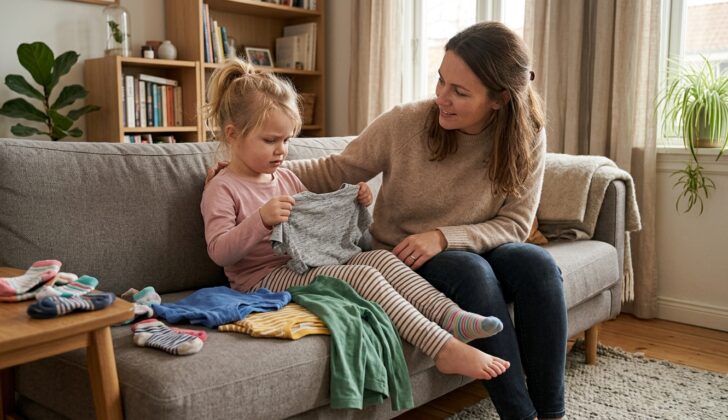
If you have ever found yourself standing in your child’s bedroom holding up three different pairs of pants while they cry because “none of them feel right,” this article is for you.
If dinner ends with untouched food on the plate because your child insists it is “gross” without taking a bite, this article is for you too.
As parents and caregivers, these moments can be incredibly frustrating. They often happen during the busiest parts of the day—the morning rush to get out the door, the evening scramble to prepare dinner, or those moments when everyone is already tired and stretched thin.
Put on your clothes.
Eat your dinner.
These sound like simple childhood expectations.
So when your child refuses to wear socks because the seams “hurt,” insists on wearing the same shirt every day, gags at mashed potatoes, or melts down because a piece of chicken is touching their macaroni and cheese, it is natural to wonder:
Are they being picky?
Are they trying to be difficult?
Should I push harder?
Am I making things worse by accommodating them?
Sometimes, these behaviors are not rooted in defiance at all. They may be connected to the way a child’s nervous system experiences and responds to sensory information.
Imagine wearing a sweater that feels like steel wool scratching against your skin.
Picture spending the entire day aware of a sock seam pressing against your toes.
Imagine taking a bite of food that feels so slippery, grainy, mushy, or unpredictable that your whole body wants to spit it out.
For some children, these experiences are very real.
Their brains may notice and respond to sensory information differently.
That changes the question from:
“How do I make my child stop doing this?”
to:
“What is my child trying to communicate?”
Why Kids Struggle With Clothes and Food
Children experience clothing, food, sounds, smells, movement, and touch in different ways. Something that feels completely ordinary to one child may feel intensely uncomfortable to another.
A child may be particularly sensitive to:
- Clothing seams
- Tags
- Certain fabrics
- Tight or loose clothing
- Waistbands
- Socks and shoes
- Food textures
- Food temperatures
- Foods touching each other
- Strong smells
- Unpredictable foods
Other children may actively seek certain sensory experiences. They may prefer crunchy foods, tight clothing, strong movement, or firm pressure.
There is no single sensory profile that applies to every child.
The important thing is to notice your child’s patterns.
Sensory Sensitivities: Clothes and Food
Let’s imagine a six-year-old named Noah.
Every morning begins with good intentions. His mother lays out his clothes the night before to make the morning easier, but the same scene unfolds.
“The shirt is too tight.”
“These pants are scratchy.”
“My socks feel weird.”
The pile of rejected clothing grows larger while everyone becomes increasingly frustrated.
By the time Noah finally gets dressed, his mother feels exhausted and guilty. She wonders if she should have held firmer boundaries. She worries that she is giving in too much. She fears she is creating bad habits.
Then dinner arrives.
Noah pushes away the casserole before tasting it. He refuses the vegetables on his plate and asks for one of the handful of foods he eats consistently.
Family members offer well-intentioned advice.
“If he is hungry enough, he will eat.”
“You just have to stop catering to him.”
“He will grow out of it.”
His parents begin questioning themselves.
But when they start paying closer attention, they notice something important.
Noah is not refusing all clothing.
He consistently chooses soft cotton fabrics and avoids stiff materials. Tagless shirts are easier than collared ones. Elastic waistbands work better than jeans. Seamless socks dramatically improve the morning routine.
The same pattern appears with food.
Noah enjoys crunchy foods. Crackers, pretzels, and thin apple slices are reliable choices. Foods that are mushy, mixed together, slippery, or difficult to predict are much harder.
Yogurt, casseroles, and mashed potatoes often lead to distress.
What initially looked like stubbornness begins to look more like communication.
Noah is telling his parents something important about how his body experiences the world.
Understanding this does not mean eliminating all expectations or allowing children to avoid every uncomfortable experience forever. Instead, it means meeting children where they are while helping them gradually build flexibility and confidence.
Looking Beneath the Behavior
When a child refuses a particular shirt or pushes away a certain food, it can be tempting to focus only on the behavior.
But behavior gives us information.
Instead of asking:
“How do I get my child to stop?”
try asking:
“What might this behavior be telling me?”
Look for patterns.
Does your child consistently reject certain fabrics?
Do they tolerate loose clothing better than tight clothing?
Do they prefer crunchy foods?
Do mixed foods cause more distress?
Do they become upset when foods touch?
Do they react more strongly when they are tired, hungry, or overwhelmed?
These observations can help you understand what your child may be experiencing.
You are becoming a detective rather than a judge.
Understanding Sensory-Sensitive Clothing
Clothing can create surprisingly big challenges for children with sensory sensitivities.
A child may complain that clothing feels:
- Scratchy
- Itchy
- Tight
- Loose
- Bumpy
- Rough
- Hot
- Heavy
- Uncomfortable
They may dislike:
- Tags
- Seams
- Waistbands
- Collars
- Certain fabrics
- Socks
- Shoes
- Buttons
- Clothing that fits differently than expected
For Noah, soft cotton shirts, tagless clothing, elastic waistbands, and seamless socks made a significant difference.
That does not mean his parents had to eliminate every challenging clothing experience forever.
It meant they first identified what was making the experience difficult.
Small adjustments can sometimes reduce unnecessary distress and give children more energy to work on other areas of flexibility.
Understanding Food Texture Sensitivities
Food can involve many sensory experiences at once.
Children may notice:
- Texture
- Temperature
- Smell
- Taste
- Appearance
- Sound
- How food feels in their mouths
- Whether foods touch each other
A child might happily eat a crunchy apple but reject applesauce.
They may eat crackers but refuse bread.
They may enjoy plain pasta but become upset when sauce is added.
They may tolerate foods separately but refuse them when they are mixed together.
These differences can provide useful clues.
For some children, the challenge is not simply whether they like a food. The sensory experience itself may feel difficult or unpredictable.
This is one reason that phrases like “Just take one bite” do not always solve the problem.
Why Forcing Exposure Can Backfire
One common misconception about sensory sensitivities is that children simply need more exposure.
Gradual exposure can be helpful for some children, but forcing a child into an overwhelming sensory experience can increase distress rather than build confidence.
Imagine being terrified of heights and having someone insist that the best solution is to push you off the highest diving board.
Most adults would not become more confident through that experience.
They would probably become more fearful.
Children can have similar experiences with clothing, foods, and other sensory challenges.
Instead, children often benefit from manageable steps, predictability, trust, and a sense of safety.
The goal is not to force a child to tolerate everything immediately.
The goal is to help them gradually become more comfortable while respecting their communication and individual needs.
Start With Small, Manageable Steps
When Noah’s mother purchased a new pair of pajamas, she did not insist that he wear them all night immediately.
Instead, she invited him to try them while reading a bedtime story.
“Let’s see if you can wear them until we finish this book.”
The next evening, they tried again.
Some nights he managed five minutes.
Other nights he asked to take them off immediately.
Instead of focusing on perfection, his parents celebrated the effort.
“You tried something new today. That was brave.”
The same approach helped at mealtimes.
Rather than making the goal eating a new food, Noah’s parents shifted their focus toward exploring it.
At first, success meant tolerating a new food on the table.
Later, it meant touching it.
Then smelling it.
Eventually, he licked a strawberry he had refused for months.
The first time he took an actual bite, his parents resisted the urge to make a huge celebration.
Instead, they calmly said:
“You were curious about that food today.”
Removing some of the pressure created space for confidence to grow.
Progress does not always happen quickly, and it is rarely perfectly linear.
But small steps matter.
Help Your Child Find Words for Sensory Experiences
One of the most powerful things parents can do is help children develop language for what they are experiencing.
Sometimes children do not have the words to explain their discomfort.
Instead of saying:
“This fabric feels itchy.”
they scream.
Instead of saying:
“That texture makes me nervous.”
they push the plate away.
Instead of saying:
“I am overwhelmed.”
they melt down.
Teaching sensory vocabulary during calm moments can give children another way to communicate.
You might introduce words such as:
- Soft
- Scratchy
- Itchy
- Bumpy
- Rough
- Smooth
- Sticky
- Wet
- Dry
- Hot
- Cold
- Tight
- Loose
- Crunchy
- Mushy
- Slippery
Noah’s mother eventually changed how she responded to clothing complaints.
Instead of saying:
“Stop complaining about your socks.”
she asked:
“Help me understand. What do they feel like?”
“They feel bumpy,” Noah answered.
When he rejected a new food, she might say:
“I wonder if the texture feels different in your mouth.”
Slowly, Noah learned to communicate:
“I don’t like how this feels.”
“Can I have help?”
“I’m not ready to try that yet.”
The goal was never to avoid every challenge.
The goal was to replace tears and frustration with communication whenever possible.
Celebrate Progress, Not Perfection
As parents, we naturally focus on the finish line.
We want our children to eat a wider variety of foods, wear weather-appropriate clothing without distress, and move through daily routines more easily.
Those goals are understandable.
But growth often happens quietly.
A child who once screamed when applesauce was nearby may eventually touch it.
A child who only wore one type of sock may tolerate a different pair for ten minutes.
A child who cried through every clothing change may learn to say:
“This one is too scratchy.”
These are not small accomplishments.
They are signs that a child is learning to:
- Understand their body
- Recognize sensory differences
- Communicate their needs
- Tolerate manageable challenges
- Recover from difficult experiences
- Build confidence
Progress is not always a straight line.
There may be a successful day followed by a difficult one.
That does not mean your child has gone backward.
Sometimes learning looks like trying something new. Sometimes it looks like asking for help. Sometimes it simply looks like being able to explain what feels wrong.
All of those things count.
When Sensory Sensitivities Affect Daily Life
Sensory preferences and sensitivities can be part of normal individual differences. However, if sensory challenges are significantly interfering with everyday life, additional support may be helpful.
Consider talking with your child’s healthcare or developmental team if sensory challenges are making it consistently difficult for your child to:
- Get dressed
- Eat or participate in family meals
- Attend school
- Participate in activities
- Complete daily routines
- Sleep
- Leave the house
- Participate in social experiences
Depending on your child’s needs, professionals such as an occupational therapist, pediatrician, speech-language pathologist, or other developmental specialist may be able to help you better understand what is happening and identify appropriate supports.
Seeking support does not mean something is wrong with your child.
It means you are looking for ways to understand your child’s experiences and help them develop useful skills.
Final Thoughts
If your child struggles with certain clothes, textures, or foods, I hope you hear this:
Your child is not giving you a hard time. They may be having a hard time.
Their sensory experiences are real, even when those experiences are difficult for other people to understand.
Responding with curiosity instead of judgment can change the entire interaction.
Instead of:
“Why are you being so difficult?”
you might begin asking:
“What is your body telling you?”
Instead of demanding compliance, you can teach communication.
Instead of expecting immediate tolerance, you can celebrate manageable steps.
Instead of focusing only on the finish line, you can notice the small victories along the way.
A child who once screamed over a sock seam may eventually say, “This feels scratchy.”
A child who refused every unfamiliar food may eventually touch, smell, or taste something new.
A child who once melted down when something felt uncomfortable may eventually learn to ask for help.
Those moments matter.
Your child is learning to understand their body, communicate their needs, and navigate experiences that feel difficult.
And perhaps most importantly, they are learning:
“My grown-ups believe me.”
“They listen to me.”
“They help me through hard things.”
That sense of safety can become the foundation for growth—not just with sensory experiences, but across communication, emotional regulation, independence, and everyday life.
Keep Learning & Stay Connected
Follow First Words Bright Futures on Facebook and Instagram for:
-
Daily speech tips
-
Fun activity ideas
-
Q&A with a pediatric SLP
Explore More:
- MDS: How to Give Specific Praise to Support Your Child’s Communication Skills
- MDS: Sensory Play Activities That Support Speech and Language
Disclaimer: This article offers general educational information. It is not a substitute for professional evaluation or treatment. Please consult a licensed Speech-Language Pathologist for personalized concerns regarding your child’s speech development.