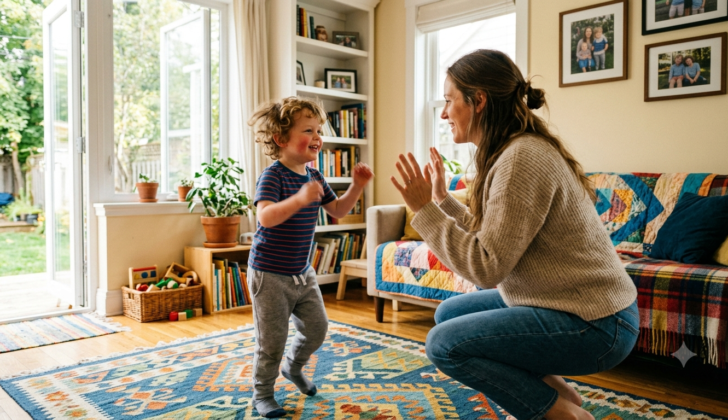
If you have ever wondered why your child melts down during transitions, struggles to sit for a story, interrupts constantly, or seems unable to slow their body down, you are not alone. Many young children are still learning how to pay attention, manage big feelings, wait their turn, and control their bodies and words. These skills take time to develop. Children do not learn these skills best through lectures, worksheets, or constant correction. They learn through play.
Simple games can help children build attention and self-regulation in ways that feel fun, safe, and natural. Several of the games speech-language pathologists, occupational therapists, teachers, and psychologists use during therapy are games families already know.
Attention and self-regulation are deeply connected to communication. A child who cannot regulate their body may struggle to listen. A child who cannot pause may have difficulty taking turns in conversation. A child with poor attention may miss important language during learning and play. These skills work together every single day.
What Is Attention?
Attention is the ability to focus on something long enough to take in information, participate, and respond. Young children are not expected to focus for long periods of time. Attention develops slowly over childhood. A preschooler who wiggles, gets distracted, or jumps from toy to toy is not automatically showing a problem.
However, some children have a harder time developing these skills.
You may notice your child:
- Frequently switches activities
- Has trouble listening to directions
- Seems “busy” all the time
- Cannot finish simple tasks
- Interrupts often
- Struggles during group activities
- Gets frustrated quickly
- Needs many reminders
- Has difficulty waiting
Attention is not just about “trying harder.” It is connected to brain development, movement, emotions, sensory processing, sleep, language skills, and even stress levels.
What Is Self-Regulation?
Self-regulation is the ability to manage emotions, body movements, attention, and reactions.
This includes skills like:
- Waiting
- Taking turns
- Stopping when asked
- Handling frustration
- Transitioning between activities
- Recovering from disappointment
- Staying calm enough to listen and communicate
Young children are not born with these skills. They borrow regulation from adults first. That means your calm voice, routines, and playful support help build the brain pathways they need over time. Self-regulation is not about having a “perfectly behaved” child. It is about helping children gradually learn:
- “I can slow my body.”
- “I can wait.”
- “I can listen.”
- “I can handle hard moments.”
- “I can recover.”
How Attention and Self-Regulation Connect to Communication
This connection is huge. Communication is not only about saying words correctly. Children also need to:
- Listen to others
- Stay engaged long enough to understand language
- Notice social cues
- Take conversational turns
- Pause before responding
- Handle frustration during interactions
- Shift attention between people and activities
Think about a simple conversation.
A child has to:
- Focus on the speaker
- Process the language
- Wait for their turn
- Organize a response
- Stay emotionally regulated
That is a lot of work for a little one’s brain.
Children with weak attention or self-regulation skills may:
- Interrupt frequently
- Miss directions
- Appear not to listen
- Walk away during conversations
- Have trouble answering questions
- Struggle in group settings
- Become dysregulated during play
This is why building these foundational skills through games can support communication growth too.
Why Games Work So Well
Games naturally teach children to:
- Stop and start
- Listen carefully
- Follow rules
- Take turns
- Wait
- Watch others
- Shift attention
- Handle winning and losing
- Stay engaged
Games keep learning emotionally safe. Children learn best when they feel connected and playful. You do not need expensive materials or long activities. Short, consistent practice is often far more effective. Even five to ten minutes a day can make a difference.
Simple Games That Build Attention and Self-Regulation
1. Red Light, Green Light
This classic game is great for impulse control and listening.
What It Builds
- Body control
- Listening
- Stopping impulses
- Attention to verbal cues
How to Play
- Have your child stand several feet away.
- Say “green light” for them to move.
- Say “red light” for them to freeze.
- Add silly variations once they understand the game.
You can also:
- Hop on green light
- Tiptoe on yellow light
- Crawl on blue light
Parent Script
“Your job is to listen carefully to the words. When you hear red light, freeze your body.”
If your child struggles:
“Oops! Your body kept moving. Let’s try again together.”
Notice the calm correction. The goal is practice, not perfection.
2. Simon Says
This game builds listening, attention, and inhibition skills.
What It Builds
- Auditory attention
- Following directions
- Impulse control
- Processing language
How to Play
- Give actions beginning with “Simon says.”
- Occasionally leave off “Simon says.”
- Children only complete actions when the phrase is included.
Beginner Tip
Start easy:
- Touch your nose
- Clap your hands
- Jump once
Then increase difficulty:
- Touch your head then spin
- Clap three times and sit down
Parent Script
“Listen with your ears before your body moves.”
This phrase helps children pause and think first.
3. Freeze Dance
Children often regulate better through movement than sitting still.
What It Builds
- Body awareness
- Attention
- Emotional regulation
- Motor control
How to Play
- Turn on music.
- Dance together.
- Pause the music randomly.
- Everyone freezes.
Add emotions:
- Freeze like you are sleepy
- Freeze like you are excited
- Freeze like you are nervous
This also helps children connect emotions to body language.
Parent Script
“Your body was moving fast. Now let’s help it stop and get calm.”
4. Turn-Taking Games
Simple board games are excellent for self-regulation.
Good preschool games include:
- Candy Land
- Pop the Pig
- Sneaky Snacky Squirrel
- Zingo
- Don’t Break the Ice
What It Builds
- Waiting
- Flexibility
- Emotional regulation
- Social communication
Step-by-Step Support
Some children struggle to wait calmly. Help by narrating the process.
Parent Script
“It is hard waiting sometimes. First Mommy takes a turn, then you get your turn.”
Or:
“You are waiting with your body calm. That is a big skill.”
Children need acknowledgment when they are practicing hard things.
5. Obstacle Courses
Obstacle courses are amazing for busy bodies.
What It Builds
- Sustained attention
- Sequencing
- Body regulation
- Following directions
Easy Setup Ideas
- Crawl under a chair
- Jump over pillows
- Toss a stuffed animal into a basket
- Spin once
- Walk on tape lines
Increase Attention Demands
Instead of showing all steps, say them verbally.
“First jump three times, then crawl under the table, then touch the wall.”
This helps build listening memory and attention.
6. “Copy Me” Games
These games are simple but powerful.
What It Builds
- Visual attention
- Joint attention
- Social engagement
- Motor planning
How to Play
Take turns copying:
- Facial expressions
- Body movements
- Clapping patterns
- Silly sounds
Parent Script
“Watch my body carefully.”
Then:
“Now I will watch your body.”
This back-and-forth interaction also supports conversational turn-taking skills later on.
7. Slow Motion Races
Many children only hear adults say:
“Slow down!”
But they might need help actually learning how.
What It Builds
- Body awareness
- Motor control
- Regulation
How to Play
Challenge your child to:
- Walk slowly
- Talk slowly
- Move arms slowly
- Build slowly
Make it silly and fun.
Parent Script
“Can your body move like a turtle instead of a race car?”
Children often respond better to playful imagery than repeated commands.
8. Breathing Games
Deep breathing can feel boring to children unless it becomes playful.
Try:
- Pretend to blow up balloons
- Blow cotton balls across the table
- Smell flowers and blow out candles
- Blow bubbles slowly
What It Builds
- Calm body regulation
- Emotional control
- Awareness of breathing
Parent Script
“Let’s help your body feel calm again.”
Avoid saying:
“Calm down.”
Children often need support how to calm down.
How to Make These Activities Successful
Keep Activities Short
Young children learn best in short bursts. Five minutes of positive practice is better than forcing a 30-minute activity that ends in frustration.
Follow Your Child’s Interests
If your child loves dinosaurs, superheroes, or princesses, use those themes. Motivation increases attention.
Practice During Calm Moments
Do not wait until your child is already dysregulated. These skills grow best during playful, connected moments.
Expect Mistakes
Children learn regulation by practicing it repeatedly. Mistakes are part of the process.
Try saying:
“You are still learning.”
“That was tricky.”
“Let’s practice again.”
What If My Child Struggles A Lot?
Some children need more support developing attention and regulation skills.
You may notice:
- Extremely short attention span
- Frequent meltdowns
- Difficulty participating in simple games
- Aggressive reactions
- Constant movement
- Significant frustration
- Trouble with transitions
This does not mean you failed as a parent. Children develop differently, and some need extra support and teaching. If concerns are interfering with daily life, communication, learning, or relationships, consider talking with:
- Your pediatrician
- A speech-language pathologist
- An occupational therapist
- A psychologist
- Your child’s teacher
Early support can make a big difference.
Everyday Moments Count Too
You do not need fancy activities all day long. Attention and self-regulation can be practiced during:
- Grocery shopping
- Bath time
- Cleanup
- Cooking
- Waiting in line
- Car rides
- Story time
Even simple moments like:
“Wait until the light turns green.”
“Listen for the timer.”
“Take turns stirring.”
help build these skills.
Final Thoughts
Attention and self-regulation are not skills children magically develop overnight. They grow slowly through relationships, routines, repetition, movement, and play. Simple games can teach powerful lifelong skills. Communication depends on these foundational abilities too. Before children can fully express themselves, answer questions, participate socially, and learn language efficiently, they first need support paying attention, regulating emotions, and staying engaged. The goal is not a perfectly quiet child.
The goal is helping children gradually learn:
- how to pause,
- how to listen,
- how to recover,
- and how to stay connected with others.
That learning happens best through playful connection with the people they love most.
Keep Learning & Stay Connected
Follow First Words Bright Futures on Facebook and Instagram for:
-
Daily speech tips
-
Fun activity ideas
-
Q&A with a pediatric SLP
Explore More:
- MDS: How to Build Your Child’s Listening Skills Through Play
- MDS: Why Waiting Is So Hard for Young Children
Disclaimer: This article offers general educational information. It is not a substitute for professional evaluation or treatment. Please consult a licensed Speech-Language Pathologist for personalized concerns regarding your child’s speech development.