Let’s be honest…When parents hear the words sensory play, they immediately picture rice scattered across the floor, sticky hands touching the walls, water spilled everywhere, or slime somehow ending up in the carpet three days later.
While sensory play can absolutely be valuable for children, not every parent enjoys messy activities. Some families feel stressed by the cleanup. Others simply do not have the time, space, or energy for elaborate setups. That is okay. You do not have to love messes to support sensory development and communication at home.
Many children benefit tremendously from sensory experiences that are simple, controlled, easy to clean up, and realistic for everyday life. This article is designed to build on earlier sensory play topics while shifting the focus toward low-mess and low-stress ideas families can actually maintain consistently.
We will talk about:
- why sensory play still matters,
- how it connects to speech and language,
- why “messy” is not required for learning,
- and practical sensory activities that feel manageable for real families.
These ideas are designed to support communication naturally through playful interaction instead of pressure.
Sensory Play Does Not Have to Mean Chaos
One of the biggest misconceptions about sensory play is that it must involve:
- slime,
- shaving cream,
- paint,
- glitter,
- or giant sensory bins dumped across the kitchen table.
It absolutely can include those things, but it does not have to. Sensory play simply means activities that help children explore the world through their senses and bodies.
That can include:
- movement,
- touch,
- sounds,
- textures,
- visual experiences,
- and body awareness.
Some sensory activities are naturally messy. Others are surprisingly calm and contained. You are still supporting development either way.
Why Sensory Play Matters for Speech and Language
Sensory play supports much more than entertainment. Children learn language best when they are:
- engaged,
- regulated,
- attentive,
- and interacting with other people.
Sensory experiences often help children:
- stay focused longer,
- participate more willingly,
- feel calmer,
- and communicate more naturally.
These activities also create opportunities for:
- vocabulary growth,
- requesting,
- commenting,
- turn taking,
- following directions,
- and early sentence building.
For example, during a simple sensory activity, children may naturally hear and use words like:
- push,
- pull,
- open,
- close,
- shake,
- hide,
- soft,
- fast,
- cold,
- heavy.
Those repeated experiences help language become meaningful.
The Best Sensory Activities Are the Ones You Will Actually Use
Parents sometimes feel pressure to create elaborate learning experiences because of what they see online. But children do not need perfectly themed setups or expensive materials.
They need:
- interaction,
- repetition,
- engagement,
- and shared experiences with caring adults.
A five-minute activity you actually enjoy doing consistently is often far more valuable than a complicated activity that leaves everyone overwhelmed. Simple works.
Low-Mess Sensory Activities That Still Support Language Development
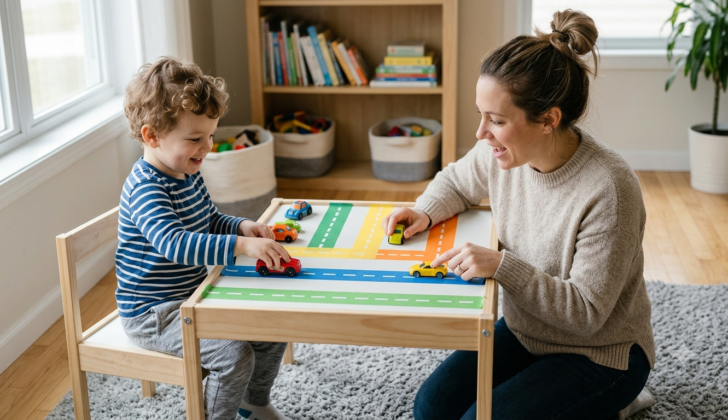
1. Painter’s Tape Roads and Paths
This activity is simple, cheap, and surprisingly engaging.
What You Need
- Painter’s tape
- Toy cars, animals, or figures
What Children Can Do
- Drive cars along roads
- Jump between tape lines
- Follow paths
- Create obstacle courses
Language Opportunities
This activity naturally encourages:
- go,
- stop,
- fast,
- slow,
- turn,
- jump,
- drive,
- up,
- down.
Parent Scripts
“The car is driving fast!”
“Stop the truck.”
“Jump over the line.”
“You turned left!”
No mess. Minimal cleanup. Lots of opportunities for movement and language.
2. Sticker Play
Stickers are incredibly underrated for sensory and language development.
Many children love:
- peeling,
- sticking,
- pulling,
- and decorating.
What You Need
- Stickers
- Paper
- Cardboard
- Reusable sticker books
Skills Supported
- Fine motor skills
- Attention
- Requesting
- Vocabulary
- Early sentences
Parent Scripts
“Peel the sticker.”
“Put it on.”
“You want more stickers?”
“Blue star!”
“Big dinosaur sticker.”
Sticker activities are especially helpful for children who enjoy repetitive fine motor play.
3. Dry Sensory Bags
Sensory bags can provide sensory input without loose materials spilling everywhere.
What You Need
- Zipper storage bag
- Pom-poms
- Cotton balls
- Foam letters
- Buttons (with supervision)
- Tape
Tape the sealed bag to a table or window.
Why Parents Often Like This
Children can squish, push, move, and explore materials without dumping them across the room.
Language Opportunities
- push,
- squish,
- find,
- move,
- soft,
- big,
- little.
Parent Scripts
“Push the red ball.”
“You found the letter!”
“Squish it.”
“Move it up.”
4. Flashlight Hide-and-Seek
This activity feels exciting to children and requires almost no cleanup.
What You Need
- Flashlight
- Darkened room
- Small toys or pictures
What Children Practice
- attention,
- visual tracking,
- turn taking,
- describing,
- requesting.
Parent Scripts
“Where is the bear?”
“I found it!”
“Shine the light up high.”
“Look under the chair.”
Children are often highly motivated during activities involving flashlights and hiding games.
5. Water Painting
This activity gives children the sensory experience of painting without the mess of actual paint.
What You Need
- Small cup of water
- Paintbrushes
- Sidewalk, fence, cardboard, or chalkboard
Skills Supported
- Action words
- Requesting
- Following directions
- Attention
Parent Scripts
“Paint the wall.”
“Dip the brush.”
“More water?”
“Big strokes!”
Since the water dries clear, cleanup is minimal.
6. Ice Play
Ice is one of the easiest low-mess sensory tools.
What You Need
- Ice cubes
- Bowls
- Spoons
- Plastic animals or toys
Language Opportunities
Children naturally experience:
- cold,
- melt,
- slippery,
- hard,
- wet.
Parent Scripts
“The ice is cold!”
“It melted.”
“Push the ice.”
“More cubes?”
You can even freeze small toys inside ice cubes for a simple “rescue” activity.
7. Bubble Wrap Stomp or Pop
Children love the sound and feeling of bubble wrap.
What You Need
- Bubble wrap
- Tape (optional)
Ways to Play
- Walk on it
- Jump on it
- Pop with fingers
- Drive cars over it
Language Opportunities
- pop,
- stomp,
- jump,
- loud,
- more,
- big pop.
Parent Scripts
“Pop it!”
“That was loud!”
“Jump again!”
“Big stomp!”
This activity also provides movement input many children crave.
8. Velcro and Pull Toys
Children who enjoy repetitive sensory input often love activities involving pulling and attaching.
Examples
- Velcro boards
- Magnetic toys
- Window clings
- Reusable sticky toys
Language Opportunities
- pull,
- stick,
- open,
- close,
- on,
- off.
Parent Scripts
“Pull it off.”
“Stick it on.”
“Open the box.”
“Close the lid.”
9. Pillow Obstacle Courses
Movement is a huge sensory need for many children and ovement activities often create very little mess!
Easy Ideas
- Jump between pillows
- Crawl under blankets
- Roll across cushions
- Balance on tape lines
Communication Opportunities
- go,
- stop,
- jump,
- crawl,
- fast,
- slow,
- my turn.
Parent Scripts
“Jump over the pillow!”
“Crawl under.”
“You went fast!”
“My turn now.”
Children often communicate more naturally when movement is involved.
10. Snack-Based Sensory Play
Food preparation activities can provide sensory experiences while also fitting naturally into family routines.
Examples
- Stir yogurt
- Peel bananas
- Pour cereal
- Squish fruit
- Spread peanut butter
Language Opportunities
- stir,
- pour,
- cut,
- spread,
- crunchy,
- sweet,
- sticky.
Parent Scripts
“Pour the cereal.”
“Spread it.”
“Crunch crunch!”
“That banana feels squishy.”
This type of sensory play often feels more practical and manageable for families.
Why Repetition Matters
Children learn language through repetition and experience. That means hearing words many times during meaningful activities.
For example:
“Push it.”
“You pushed it.”
“Push again.”
“Big push!”
This repetition helps children:
- understand words,
- connect meaning,
- and eventually use language independently.
Simple repetition is powerful.
You Do Not Need to Constantly Ask Questions
Many adults accidentally turn play into a quiz.
Instead of:
“What color is this?”
“What is that?”
“What are you doing?”
Try commenting more often.
Examples:
“You are stacking.”
“That feels soft.”
“You popped the bubble.”
“The car is driving fast!”
Children often communicate more when the pressure is reduced.
Follow Your Child’s Lead
Some children love movement. Others prefer quieter sensory activities. Pay attention to what your child naturally enjoys. You do not need to force every activity. When children feel interested and emotionally connected, communication becomes much easier.
Sensory Play Can Happen During Everyday Routines Too
You do not need special bins or structured activities every day. Children experience sensory input during:
- bath time,
- laundry,
- cooking,
- outdoor walks,
- vacuuming,
- helping clean,
- carrying groceries,
- brushing teeth,
- and bedtime routines.
Those moments still count. In fact, some of the best language learning happens during ordinary life.
What If My Child Avoids Sensory Activities?
Some children are more cautious with sensory experiences.
You may notice:
- avoiding textures,
- resisting movement activities,
- disliking loud sounds,
- becoming overwhelmed easily.
That is okay. Start slowly. Keep activities playful. Allow observation first. Avoid forcing participation. Positive experiences matter far more than pushing children into uncomfortable situations.
Final Thoughts
Sensory play does not need to be messy, overwhelming, or stressful to support communication and development. Children learn through:
- movement,
- exploration,
- repetition,
- and playful interaction with people they trust.
Some families love shaving cream and giant sensory bins. Others prefer simple, low-mess activities that fit naturally into daily life. Both approaches can support learning beautifully. The goal is not creating perfect activities. The goal is creating opportunities for:
- connection,
- engagement,
- communication,
- and joyful interaction.
Keep Learning & Stay Connected
Follow First Words Bright Futures on Facebook and Instagram for:
-
Daily speech tips
-
Fun activity ideas
-
Q&A with a pediatric SLP
Explore More:
- MDS: Sensory Play Activities That Support Speech and Language
- MDS: Sensory Processing in Children: A Parent’s Practical Guide
Disclaimer: This article offers general educational information. It is not a substitute for professional evaluation or treatment. Please consult a licensed Speech-Language Pathologist for personalized concerns regarding your child’s speech development.