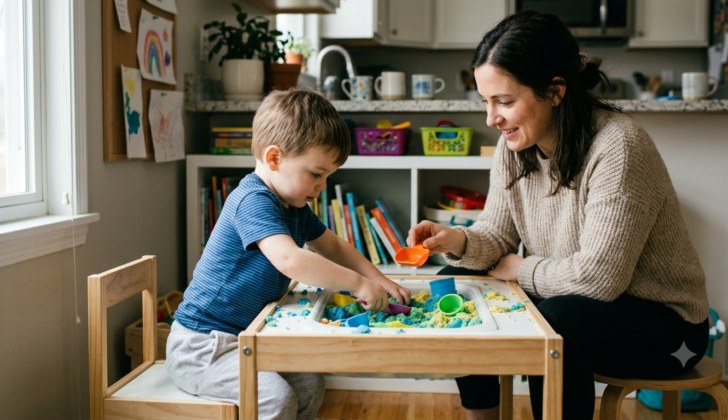
Many parents hear the term sensory play and immediately think about messy bins filled with rice, shaving cream, or slime. While those activities can absolutely be sensory play, the idea is much bigger than that.
Sensory play is one of the most important ways young children learn about the world, their bodies, and other people. It helps build attention, communication, problem solving, emotional regulation, and social interaction. Many of the skills needed for speech and language development begin with sensory experiences long before children can clearly express themselves with words.
This is one reason speech-language pathologists, occupational therapists, teachers, and early childhood professionals use sensory-based activities so often during therapy and learning. You do not need expensive materials, a Pinterest-perfect setup, or hours of preparation. Many of the most powerful sensory experiences happen during normal daily routines.
Let’s break this topic down in a simple way and talk about how sensory play supports speech and language development, why it matters, and how families can use it at home in realistic ways.
What Is Sensory Play?
Sensory play is any activity that helps children explore and learn through their senses.
Most people think of the five senses:
- Touch
- Taste
- Smell
- Hearing
- Sight
Children actually use additional sensory systems too, including:
- Movement and balance
- Body awareness
- Internal body signals like hunger, thirst, and fatigue
Sensory play helps children process information from the world around them.
This might look like:
- Squishing playdough
- Jumping on pillows
- Pouring water
- Listening to music
- Swinging
- Digging in sand
- Smelling spices while cooking
- Playing with bubbles
- Finger painting
- Crunching leaves outside
To adults, these activities may seem simple. To children, they are powerful learning opportunities.
Why Sensory Play Matters for Development
Children learn best through hands-on experiences.
Think about how often adults try to teach children by talking:
“Sit still.”
“Listen.”
“Say the word.”
“Answer the question.”
Many young children learn language more effectively when they can move, touch, see, hear, and experience something while language is happening around them.
Sensory play helps the brain:
- Pay attention
- Stay regulated
- Process information
- Build connections
- Organize learning
When children are engaged and regulated, communication becomes easier.
How Sensory Play Connects to Speech and Language
This connection is huge. Speech and language development does not happen separately from the body. Communication relies on attention, regulation, interaction, engagement, and sensory processing. Here are some ways sensory play supports communication development.
1. Sensory Play Increases Engagement
Children learn language best when they are interested and emotionally connected.
A child who is deeply engaged in play is more likely to:
- Listen
- Watch others
- Stay attentive
- Try new words
- Interact socially
Think about the difference between:
“Say ball.”
versus
Rolling a ball back and forth while saying:
“Go!”
“My turn!”
“Bounce!”
“Big ball!”
One feels like pressure. The other feels playful and natural. Sensory play creates meaningful opportunities for communication instead of forcing it.
2. Sensory Play Helps Children Regulate Their Bodies
Some children have difficulty staying calm, focused, or organized enough to communicate effectively.
You may notice:
- Constant movement
- Difficulty sitting
- Frequent meltdowns
- Avoiding certain textures or sounds
- Trouble transitioning
- Becoming overwhelmed easily
When a child’s body feels dysregulated, communication often becomes harder.
Sensory play can help children:
- Feel calmer
- Increase attention
- Organize their bodies
- Stay engaged longer
For example:
- Swinging may help one child focus.
- Playdough may help another child relax.
- Jumping may help release extra energy.
A regulated body supports a ready brain for communication.
3. Sensory Play Builds Vocabulary Naturally
Children learn words more easily when they can experience them.
Instead of teaching vocabulary through flashcards alone, sensory play allows children to:
- Feel “sticky”
- Hear “loud”
- See “tiny”
- Smell “sweet”
- Experience “cold”
This makes language more meaningful and easier to remember.
Sensory activities naturally create opportunities for:
- Describing
- Comparing
- Requesting
- Commenting
- Asking questions
4. Sensory Play Encourages Social Interaction
Many sensory activities involve shared experiences.
Children practice:
- Taking turns
- Watching others
- Joint attention
- Problem solving
- Conversation
Even simple activities like blowing bubbles can support:
- Eye contact
- Anticipation
- Shared excitement
- Requesting more
These are foundational communication skills.
5. Sensory Play Supports Pretend Play and Imagination
Pretend play is closely tied to language development.
When children pretend, they practice:
- Storytelling
- Sequencing
- Flexible thinking
- Conversation
- Perspective taking
Sensory materials often make pretend play richer and more engaging.
For example:
- Kinetic sand becomes a bakery.
- Water becomes an ocean.
- Shaving cream becomes snow.
The more engaged children are in imaginative play, the more opportunities they have to use language naturally.
Sensory Play Does Not Need to Be Complicated
Many families feel pressure to create elaborate activities.
You do not need:
- Expensive bins
- Fancy supplies
- Perfect setups
- Instagram-worthy crafts
Simple is often best.
Children mainly need:
- Opportunities to explore
- Language models
- Interaction
- Repetition
- Playful connection
Easy Sensory Activities You Can Do at Home
Water Play
Water play is calming, motivating, and full of language opportunities.
Materials
- Cups
- Bowls
- Spoons
- Funnels
- Small toys
- Water
Language You Can Model
- Pour
- Splash
- Full
- Empty
- Wet
- Cold
- Sink
- Float
- More
- Stop
Step-by-Step Ideas
- Fill a shallow bin or sink with water.
- Add cups and spoons.
- Narrate what your child is doing.
- Pause often to encourage interaction.
Parent Script
“You are pouring the water.”
“Oh no! It spilled!”
“Should we fill it again?”
“More water?”
Notice how simple and natural the language is. You do not need to quiz children constantly.
Playdough Play
Playdough is excellent for sensory exploration and communication.
What It Supports
- Fine motor strength
- Attention
- Imagination
- Vocabulary
- Social interaction
Language Ideas
- Squish
- Roll
- Push
- Big
- Tiny
- Soft
- Smash
- Cut
Step-by-Step Activity
- Sit with your child.
- Make simple objects together.
- Model language naturally during play.
Parent Script
“I am rolling a snake.”
“You made a big ball!”
“Should we cut it?”
“Let’s make pizza!”
Children learn more language through interaction than through testing.
Sensory Bins
Sensory bins are containers filled with materials children can explore.
Easy Fillers
- Dry rice
- Beans
- Oats
- Pom-poms
- Kinetic sand
- Water beads (with supervision)
- Shredded paper
Add Items Like
- Scoops
- Cups
- Toy animals
- Letters
- Vehicles
Language Opportunities
- Hide and seek words
- Following directions
- Describing
- Sorting
- Pretend play
Parent Script
“I found the dinosaur!”
“Can you scoop the blue one?”
“The rice feels scratchy.”
Bubble Play
Bubbles are one of the best communication activities for young children.
Why They Work
Bubbles naturally encourage:
- Eye contact
- Requesting
- Turn taking
- Joint attention
- Anticipation
Step-by-Step Directions
- Blow bubbles slowly.
- Pause before blowing more.
- Wait expectantly.
This creates communication opportunities.
Parent Script
“Ready… set…”
(wait)
“Go!”
“You want more bubbles!”
“Pop! Pop! Pop!”
Even children using few words can participate through gestures, sounds, or eye contact.
Cooking Together
Cooking is full of sensory experiences.
Children can:
- Smell ingredients
- Stir mixtures
- Feel textures
- Hear sounds
- Taste foods
Communication Skills Supported
- Sequencing
- Vocabulary
- Following directions
- Describing
- Requesting
Parent Script
“The batter is sticky.”
“First we pour.”
“Now we stir.”
“Mmm, it smells sweet!”
Cooking also helps children hear repetitive language naturally.
Movement-Based Sensory Play
Some children need movement to help their brains focus and regulate.
Ideas
- Jumping on couch cushions
- Animal walks
- Swinging
- Obstacle courses
- Dancing
- Crashing into pillows
- Rolling on yoga balls
Why Movement Matters
Movement can improve:
- Attention
- Regulation
- Participation
- Engagement
A child who is constantly moving is not necessarily being “bad.” Their body may simply need more sensory input.
What If My Child Avoids Certain Sensory Activities?
Some children dislike certain textures, sounds, or movements.
You may notice:
- Refusing messy play
- Covering ears
- Avoiding certain foods
- Distress with loud sounds
- Difficulty with grooming tasks
Do not force participation.
Instead:
- Start slowly
- Let your child observe first
- Offer choices
- Respect their comfort level
Forcing sensory experiences can increase anxiety. The goal is positive exploration, not pressure.
Tips for Making Sensory Play Successful
Follow Your Child’s Interests
If your child loves:
- Dinosaurs
- Cars
- Princesses
- Space
- Animals
Use those themes. Motivation increases engagement and communication.
Keep Language Simple and Natural
You do not need to talk constantly.
Try:
- Short phrases
- Repetition
- Descriptive words
- Excited tone
Avoid turning play into a quiz.
Instead of:
“What color is that?”
“What is this?”
“What shape?”
Try:
“Wow, blue bubbles!”
“That one is huge!”
“You made a tall tower!”
This reduces pressure and keeps communication fun.
Repeat Words Often
Children learn language through repetition.
If your child loves pouring water, you may say:
“Pour.”
“You poured it.”
“More pouring!”
“Pour it in.”
Repeating language during meaningful activities helps words stick.
Join the Play
Children learn communication through interaction with people.
Sit nearby.
Play with them.
Copy what they do.
Have fun together.
Connection matters more than perfection.
Everyday Sensory Experiences Count Too
Sensory play is not only something that happens in bins or activities.
It also happens during:
- Bath time
- Outdoor walks
- Baking
- Gardening
- Splashing puddles
- Digging in dirt
- Swinging
- Blanket forts
- Snuggling under heavy blankets
- Listening to music
Many of the best opportunities happen naturally throughout the day.
When to Seek Additional Support
Some children have greater sensory or communication challenges that may benefit from professional support.
Consider reaching out if your child:
- Frequently becomes overwhelmed
- Has major difficulty with transitions
- Avoids many sensory experiences
- Struggles significantly with communication
- Has very limited play skills
- Experiences frequent meltdowns
- Has difficulty participating in daily routines
Helpful professionals may include:
- Speech-language pathologists
- Occupational therapists
- Pediatricians
- Early childhood specialists
Early support can make daily life easier for both children and families.
Final Thoughts
Sensory play is much more than messy fun. It is one of the main ways children learn, connect, regulate, and communicate. When children move, explore, touch, listen, smell, and experience the world around them, they build the foundation for speech, language, attention, emotional regulation, and social interaction. You do not need perfect activities or expensive supplies.
You simply need:
- connection,
- play,
- interaction,
- and opportunities for exploration.
The most important part of sensory play is not the materials. It is the relationship built during those shared moments of play, laughter, curiosity, and communication.
Keep Learning & Stay Connected
Follow First Words Bright Futures on Facebook and Instagram for:
-
Daily speech tips
-
Fun activity ideas
-
Q&A with a pediatric SLP
Explore More:
- MDS: Sensory Preferences vs. Sensory Processing Disorder: How to Know When Your Child May Need Extra Support
- MDS: Sensory Processing in Children: A Parent’s Practical Guide
Disclaimer: This article offers general educational information. It is not a substitute for professional evaluation or treatment. Please consult a licensed Speech-Language Pathologist for personalized concerns regarding your child’s speech development.