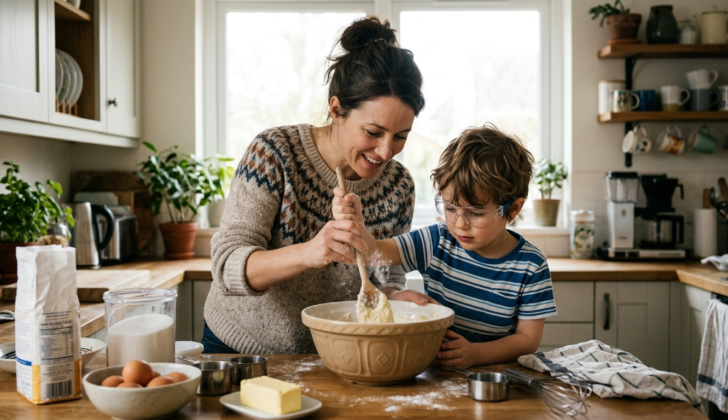
There is a reason so many children naturally gravitate toward the kitchen. They love pouring ingredients into bowls, stirring batter dramatically, cracking eggs a little too enthusiastically, and sneaking chocolate chips whenever possible. Even children who struggle to stay engaged in other activities often become interested when food, movement, and hands-on experiences are involved.Cooking may seem like just another daily routine, it is actually one of the richest language-learning opportunities families can use at home.
In earlier articles throughout this series, we explored how sensory play supports:
- requesting,
- action words,
- descriptive language,
- early sentence building,
- and conversational interaction.
This article builds on those foundational communication skills by focusing on something slightly more advanced: sequencing and following directions. Communication is not only about knowing words. Children also need to learn how to:
- organize information,
- understand steps,
- listen in order,
- predict what comes next,
- and explain experiences clearly.
Cooking naturally supports all of those skills at once. Best of all, it does not feel like “work” to children. It feels meaningful, interactive, and fun.
What Is Sequencing?
Sequencing is the ability to understand and organize events in the correct order. This includes understanding concepts like:
- first,
- next,
- then,
- after,
- and last.
For adults, sequencing feels automatic, but for children, organizing information in order is a complex skill that develops gradually over time. Think about everything involved in baking cookies:
- Gather ingredients
- Pour ingredients
- Mix batter
- Scoop cookies
- Bake them
- Let them cool
Children use sequencing constantly throughout daily life, including:
- getting dressed,
- brushing teeth,
- telling stories,
- following classroom routines,
- and explaining experiences.
This skill becomes incredibly important for both communication and learning.
Why Sequencing Matters for Language Development
Sequencing helps children:
- tell stories clearly,
- answer questions,
- explain events,
- follow directions,
- participate in conversations,
- and understand routines.
Imagine a child trying to explain how they made cupcakes without sequencing skills. You might hear:
“Then we ate them and I stirred and Mommy put them in and flour and then we cracked eggs.”
The ideas are there, but they are disorganized. As sequencing develops, children begin organizing thoughts more clearly:
“First we poured the flour. Then we cracked the eggs. Last we baked the cupcakes.”
That organization supports stronger communication overall. Sequencing also lays important groundwork for:
- reading comprehension,
- writing,
- problem solving,
- and classroom participation later on.
Cooking Naturally Teaches Order and Routine
One reason cooking is so powerful for language learning is because recipes already have built-in structure. Children quickly learn:
- some things happen first,
- some things happen later,
- and skipping steps changes the outcome.
If you bake cookies before adding flour, the recipe does not work very well. Children begin understanding that order matters. Cooking is hands-on and meaningful, the learning feels much more natural than worksheets or drills.
Following Directions Is More Than “Listening”
Many parents hear “following directions” and immediately think:
“My child just does not listen.”
Following directions actually requires many different skills working together.
Children need to:
- pay attention,
- process language,
- remember information,
- organize actions,
- and carry out the task.
That is a lot for a young brain. Cooking activities naturally strengthen these skills because children are motivated to participate and can immediately see the results of their actions.
Why Cooking Often Works Better Than Structured Practice
Children tend to learn language more effectively during meaningful experiences.
Cooking provides:
- movement,
- sensory input,
- repetition,
- visual supports,
- and shared interaction.
Children can:
- see ingredients,
- touch textures,
- smell foods,
- hear actions,
- and physically participate.
This makes language more memorable. For example, hearing:
“Stir the batter” while physically stirring creates a much stronger learning experience than simply hearing the phrase in isolation.
The Goal Is Participation, Not Perfection
One important thing to remember is that cooking with children can be messy and imperfect. That’s alright. The communication and interaction happening during the process matter far more than perfectly shaped cookies or spotless counters. Some children may:
- spill ingredients,
- forget steps,
- become distracted,
- or need extra support following directions.
That is part of learning. The goal is helping children gradually build confidence organizing information and participating in routines.
Sequencing Words Are Powerful Language Tools
Cooking naturally introduces sequencing vocabulary like:
- first,
- next,
- then,
- after,
- last,
- before,
- and finally.
These words help children organize both actions and language. Many children need repeated exposure to these concepts before they begin using them independently. Cooking creates countless opportunities to hear them naturally.
Simple Ways to Model Sequencing During Cooking
One of the easiest strategies is narrating the process while you cook together.
For example:
“First we pour the milk.”
“Next we stir.”
“Then we add the eggs.”
“Last we put it in the oven.”
Children hear sequencing language repeatedly while actively participating. That combination is powerful for learning.
Start With Simple Recipes
Children do not need complicated recipes to benefit from cooking activities. Simpler activities are often better because they allow children to focus more on interaction and language.
Good beginner cooking activities include:
- making sandwiches,
- decorating cookies,
- fruit kabobs,
- smoothies,
- pudding,
- trail mix,
- pancakes,
- or boxed muffins.
Simple routines create more opportunities for success.
Step-by-Step Cooking Activities for Language Development
Making a Smoothie
Smoothies are wonderful because children can clearly see each step happen.
Skills Supported
- Sequencing
- Following directions
- Vocabulary
- Requesting
- Describing
Language Opportunities
- pour,
- cut,
- blend,
- scoop,
- mix,
- cold,
- sweet,
- first,
- next.
Parent Scripts
“First we add the bananas.”
“Next pour the milk.”
“Now we blend it.”
“Last we drink it!”
You can also pause between steps and allow children to predict what comes next.
Decorating Cookies
Cookie decorating naturally slows children down and encourages interaction.
Skills Supported
- Following directions
- Turn taking
- Sequencing
- Descriptive language
Language Opportunities
- spread,
- sprinkle,
- sticky,
- sweet,
- first,
- then.
Parent Scripts
“First spread the frosting.”
“Now add sprinkles.”
“You used blue sprinkles first.”
“Last we eat the cookies!”
This activity also encourages describing colors, textures, and actions naturally.
Making a Sandwich
Simple food preparation activities can support sequencing beautifully.
Parent Scripts
“First put the bread down.”
“Next spread the peanut butter.”
“Then add the jelly.”
“Last put the bread on top.”
Children begin hearing how directions are organized step-by-step.
Following One-Step and Two-Step Directions
Cooking activities are excellent for practicing directions gradually.
One-Step Directions
“Pour the milk.”
“Get the spoon.”
“Stir the bowl.”
Two-Step Directions
“Get the spoon and stir the batter.”
“Put the banana in and mix it.”
As children become more successful, directions can slowly become more complex.
Visual Supports Can Help Tremendously
Many children understand sequencing more easily when they can see the steps.
You can:
- line ingredients up in order,
- show pictures of steps,
- point while explaining,
- or physically demonstrate actions first.
Visual supports reduce pressure and help children organize information more successfully.
Repetition Builds Understanding
Children often need repeated exposure to sequencing words and routines before they fully understand and use them independently.
That means hearing:
- “first,”
- “next,”
- “then,”
many times across many activities.
Cooking naturally provides that repetition in meaningful ways.
Narrating Is Often More Helpful Than Constant Questioning
Many adults instinctively ask children lots of questions during activities.
“What comes next?”
“What are we doing?”
“What ingredient is this?”
Questions can certainly be helpful sometimes, but too many may create pressure. Instead, focus heavily on modeling language naturally:
“You are stirring slowly.”
“Next we pour the flour.”
“The batter looks sticky.”
Children learn a tremendous amount simply through hearing language during meaningful experiences.
Mistakes Are Part of Learning
If a child:
- forgets a step,
- pours too much,
- spills ingredients,
- or mixes things out of order,
try to stay calm and playful. Mistakes create opportunities for problem solving and communication too. For example:
“Oops! We forgot the milk.”
“That was too much water. Let’s fix it together.”
These moments teach flexibility and resilience alongside language.
Cooking Also Supports Social Communication
Beyond sequencing and directions, cooking naturally encourages:
- turn taking,
- requesting,
- commenting,
- problem solving,
- and conversational interaction.
Children often communicate more during shared activities that feel purposeful and engaging. The kitchen creates many natural opportunities for connection.
Everyday Routines Count Too
Children build sequencing skills during many daily routines besides cooking.
For example:
- getting dressed,
- brushing teeth,
- packing backpacks,
- planting flowers,
- cleaning up toys,
- and bedtime routines.
The more children hear sequencing language during everyday experiences, the stronger those skills become.
When to Seek Additional Support
Some children need extra support understanding directions, sequencing information, or organizing language. Consider reaching out to a Speech-Language Pathologist if your child:
- struggles significantly following directions,
- has difficulty understanding routines,
- becomes frustrated during multi-step tasks,
- has trouble retelling events,
- or struggles organizing thoughts clearly.
Early support can help children build confidence and stronger communication skills over time.
Final Thoughts
Cooking creates far more than meals and snacks. It creates opportunities for children to:
- listen,
- sequence,
- follow directions,
- organize thoughts,
- and build meaningful communication skills through shared experiences.
Cooking is interactive, repetitive, and engaging, children often learn these skills more naturally than they would during structured practice alone. You do not need perfect recipes or elaborate activities.
You simply need:
- shared interaction,
- simple language,
- repetition,
- and the willingness to slow down and include your child in everyday routines.
Sometimes the strongest learning happens in ordinary moments — standing together in the kitchen, stirring batter, and hearing the words:
“First, next, then, and last.”
Keep Learning & Stay Connected
Follow First Words Bright Futures on Facebook and Instagram for:
-
Daily speech tips
-
Fun activity ideas
-
Q&A with a pediatric SLP
Explore More:
- MDS: Low-Mess Sensory Play Ideas That Build Speech and Language Skills
- MDS: Sensory Play Activities That Support Speech and Language
Disclaimer: This article offers general educational information. It is not a substitute for professional evaluation or treatment. Please consult a licensed Speech-Language Pathologist for personalized concerns regarding your child’s speech development.